
Course Preview: Royal Birkdale
The 154th Open returns for the eleventh time to a player favorite and reliable creator of worthy Champion Golfers of the Year.

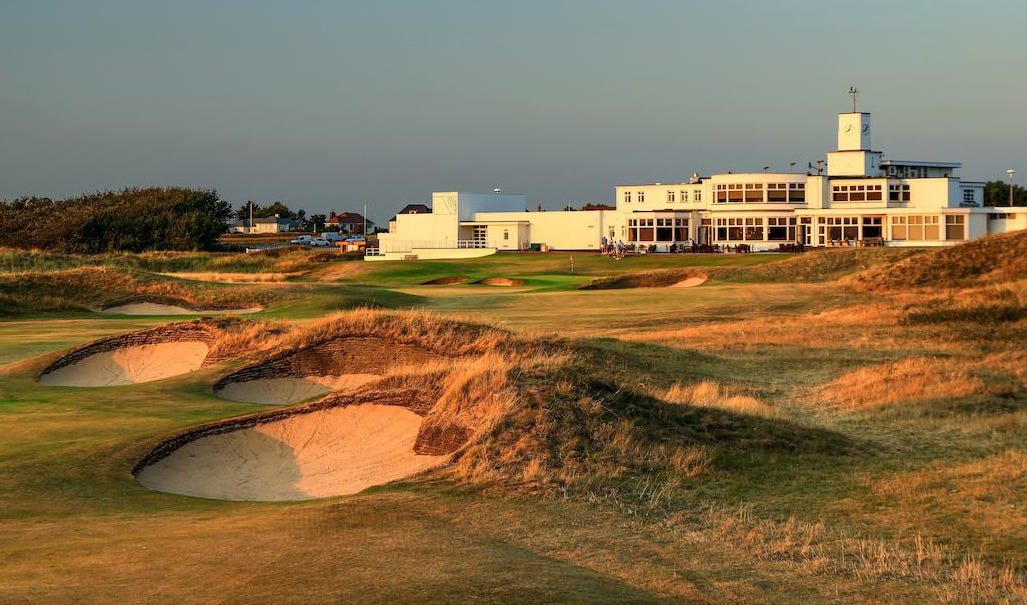
Royal Birkdale is a study in constant change with remarkably few of the side effects that have felled other regularly updated championship courses. It’s rare that any course, much less a links where “found” features are held sacred, could be altered so regularly and still remain beloved by golf pros who hate anything getting in their way. Especially something foisted upon them by an arm-waving average golfer.
Consider two of the par-3s they’ll face in The 154th Open: Nos. 12 and 15. Each is an add-on created by gallery flow issues when the legions of Arnie (1961/old No. 17) and Jordan (2017/old No. 14) couldn’t move freely enough to bring their hero home. Taking holes out for that reason is normally a recipe for disaster or at least a yellow card violation with the Golf Gods. And while the verdict has yet to be rendered on this year’s lengthy new Redanish par-3 15th, the now long-standing 12th is one of the most scenic and exciting one-shotters on the entire Open rota (it, too, saw the dune behind the green shaved away to make it a more exacting shot).
Various nips, tucks, and remodels since 1932’s aggressive overhaul by F.G. Hawtree and J.H. Taylor have been made prior to every Open in the name of keeping the course relevant with the current ball (and the triathletes!). Through it all, Birkdale has somehow consistently produced champions who were the most accomplished during the year they won and among the best to ever play the game.
Pro golfers, members and visitors are generally taken by Royal Birkdale’s better-than-most first impression. Cue plenty of “it’s all right in front of you” during next week’s pre-tournament press conferences. Yet through its many surgeries, Birkdale’s cinematic sequencing has been a constant force: the links starts out on quieter ground with straightforward, but directionally diverse holes asking enough questions to lay the groundwork for its looming second and third acts. Things ratchet up at the 10th tee where a decision off the tee can set the tone for the entire back nine, before the drama builds to a finish through the central-casting-worthy dunescape and a famous final scene in front of the iconic clubhouse.
With a minimal number of funky fairway lies and blind tee shots, Birkdale is pleasing to pro golfers who understandably despise any vagaries prone to mess with their checking account balances. Whatever it lacks in links quirk, Birkdale ultimately charms thanks to its changes of direction, solvable questions with good shots, intricacies produced by changing winds, and general playability even in extreme weather that has been known to pop up during Open weeks.
Nine years ago, Branden Grace became the first player to break 63 in a major and Jordan Spieth won with a 12-under-par 268 total. A healthy 21 players finished under par that week par despite enough wind and rough to keep things tricky. In the two prior Opens, Mark O’Meara won in a playoff over Brian Watts after finishing at even-par 280, while Padraig Harrington claimed the 2008 Open with a three-over-par 283. (Royal Birkdale played as the toughest course in championship golf that year with a 74.87 (+4.87)).
But with less wind, rain, or rough, Birkdale is vulnerable to low scores. In 1991, Ian Baker-Finch posted the lowest 72-hole score in an Open at the time when he won with a blistering 64-66 over the final 36.
A recent heat wave is expected to continue into Open week, with temperatures forecasted to reach at least 80 degrees from Sunday through Thursday. The links should be running fast, and the fescue roughs may only pose genuine danger if someone drops a cigarette.


Holderness & Bourne is offering a terrific array of colors with its Summer 2026 Collection. From performance shorts, cotton-stretch button-downs, and their brilliant-fitting polos, the sharp array of colors and styles can be seen at this one-stop page. As always, thanks to H&B for supporting The Quad’s Course Previews.
Birkdale By The Numbers
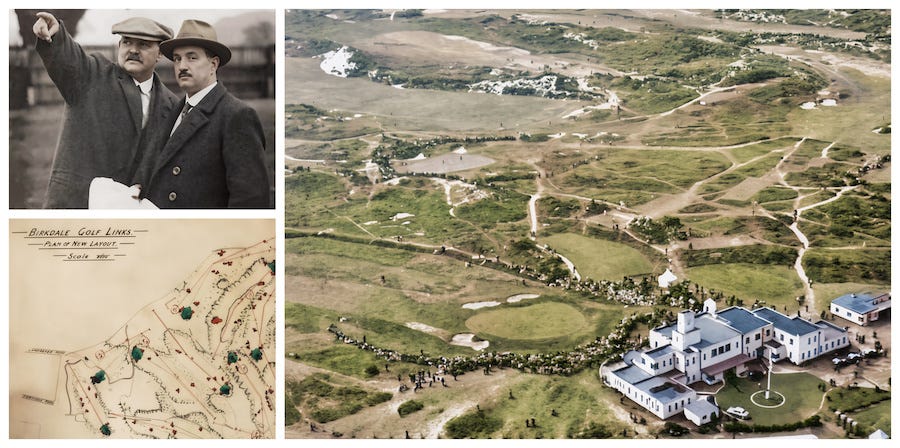
1889: Birkdale Golf Club formed at its original location
1897: Club leases land for new location at today’s site
1922: Club secures long-term lease from Sefton Council
1951: Receives Royal title
10: Previous Open Championships (1954, 1961, 1965, 1971, 1976, 1983, 1991, 1998, 2008, 2017)
1965: Year Birkdale hosted the Ryder Cup and The Open
37: Total major championships won by Birkdale’s Champion Golfers of the Year
8: Architects who have worked on the course (George Lowe, F.G. Hawtree and J.H. Taylor, Fred Hawtree, Donald Steel, Martin Hawtree, Tom MacKenzie and Martin Ebert)
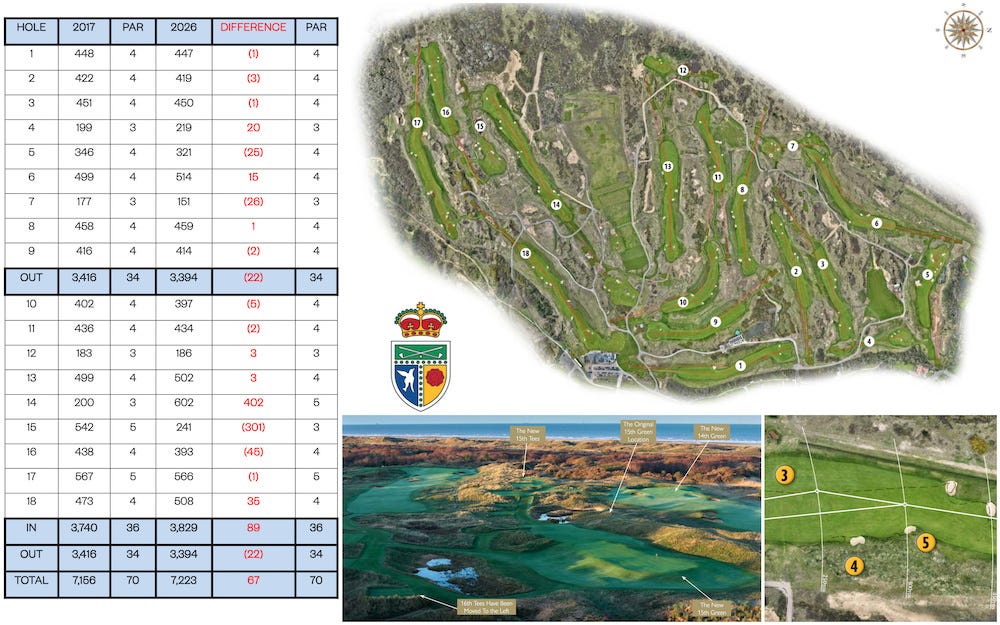
7,223: 154th Open course yardage (7,156 in 2017)
70: Par (Par-73 in the 1954, 1965, 1971 Opens, Par-72 for the 1961 and 1976 Opens, Par-71 in 1983, Par 70 for Opens in 1991, 1998, 2008, and 2017)
3,394 vs. 3,829: Front nine (34) vs. back nine (36) yardage
1 of 2: Rota courses with nines returning to the clubhouse (Muirfield)
108: Bunkers (123 in 2017)
0: Bunkers to the rear of greens
1: Donut bunker (restored to original size on No. 7)
12: Bunkers on the 14th hole
10th: Fairway will play as out-of-bounds from the 9th tee
49: Feet above sea level of the highest property point (Clubhouse)
21: Feet above sea level of the lowest property point (6th fairway)
6: Holes with water in play
3: Returning holes significantly shortened since 2017 (Nos. 5, 7, 16)
151-186-219-241: Official yardages of the four par-3s
£495: Unaccompanied visitor guest fee
Greenkeeping And Artisans
Greenkeeper: Sean McLean
Deputy Course Manager Scott Corrigan
Team: 47 (17 staff, 30 volunteers for The Open)
Fairways and Tees: Fescue dominant
First cut rough: Fescue dominant
Uncut rough: Mix of indigenous links grasses, e.g., red fescue, marram grass, sweet vernal grass, bentgrass, and native wildflowers.
Greens: Fescue and browntop bentgrass blend
Green surrounds: Predominantly fescue but with some browntop bentgrass
Average green size: 5,200 square feet
Sustainability: GEO Certified
Wildlife: Natterjack toads, sand lizards, and numerous bird species
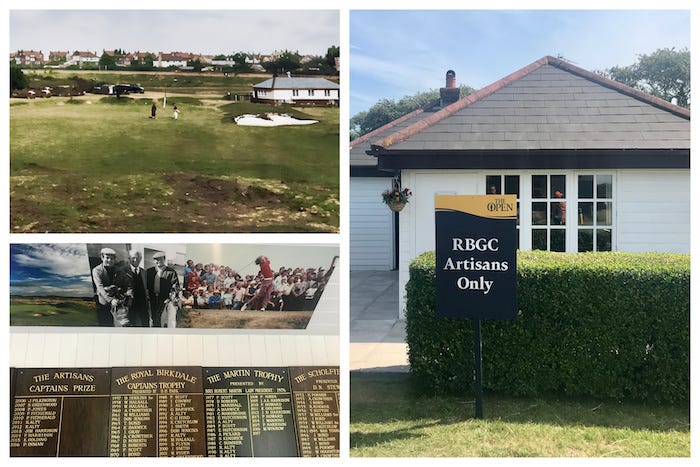
Royal Birkdale’s everyday crew is assisted by members of a unique club-within-the-club: the Birkdale Artisans are “working class” golfers who assist with maintenance by filling divots, repairing pitchmarks, removing weeds, and offering around 40 sets of additional eyes to report any untoward issues to the greenkeeper. In return, they get to play Royal Birkdale.
The Artisans retain a cozy clubhouse that was the club’s original pro shop. It sits between the fourth green and fifth tee, where the interior includes images of past champions and a course care reminder:
As the earth is not meant to be carried away
The divots you cut in the course of your play,
Should be neatly replaced by your caddie or you,
With their roots to the earth and their blades to the blue.
Last Time: Grace’s Historic 62
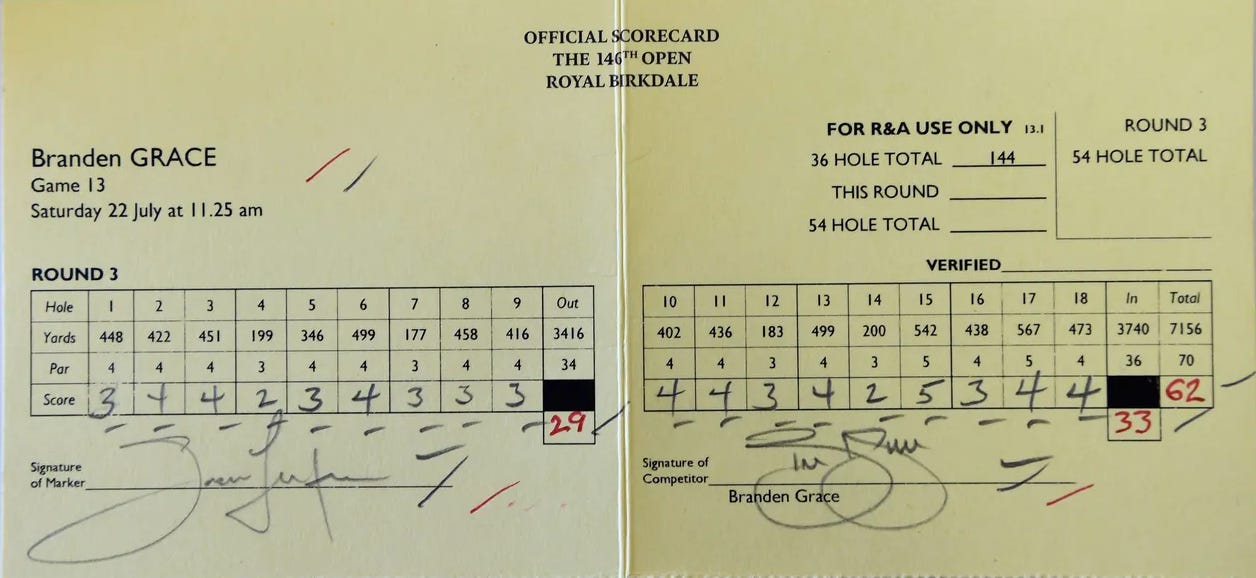
After 13 63s were posted in The Open, Branden Grace broke the scoring barrier with a third-round 62. His 2017 epic trip around Birkdale remains the only 62 posted in The Open. It came 44 years after Johnny Miller shot the first 63 in a major.
Grace was unaware of what he’d just done.
“I didn’t know what was going on at 18, I promise you,” said Grace after making history. “I had no idea that 62 was the lowest ever.”
Four 62s have since been posted at the major championships: Rickie Fowler and Xander Schauffele in the 2023 U.S. Open at Los Angeles Country Club; Shane Lowry and Schauffele at the 2024 PGA Championship at Valhalla Golf Club.
After multiple course changes since 2017, Grace’s round will no longer be considered the competitive course record once a new mark is set during the 154th Open. With a lack of rough or significant distance added to the course, plus the uncontrollable explosion of pure, unadulterated athleticism in the years since, expect even shorter approach irons than Grace hit in 2017:
1st - 448 yard/par 4 - Driver, 127 to hole, Gap Wedge (GW) to 16 feet, birdie
2nd - 422 yard/par 4 - Driver, 130 to hole, GW, 2 putt for par
3rd - 451 yard/par 4 - Driver, 158 to hole, 9 iron to 8 feet for par
4th - 199 yard/par 3 - 8-iron, 176 to hole, 35-foot putt for birdie
5th - 346 yard/par 4 - Driver, 283 onto green, 2-putt from 25 tee for birdie
6th - 499 yard/par 4 - Driver, 218 to hole, 3-iron, 2 putts for par
7th - 177 yard/par 3 - 9-iron, 151 to hole, 2 putts from 14 feet for par
8th - 458 yard/par 4 - Driver, 188 to hole, 9-iron to 25 feet for birdie
9th - 416 yard/par 4 - Driver, 129 to hole, GW to 12 feet for birdie
10th - 402 yard/par 4 - 5-iron, 161 to hole, 9-iron short of green, two putts for par
11th - 436 yard/par 4 - Driver, 173 to hole, 7-iron, 2 putts for par
12th - 183 yard/par 3 - 6-iron, 184 to hole, 2 putts from 15 feet for par
13th - 499 yard/par 4 - Driver, 180 to hole, 9-iron, 2 putts from 11 feet
14th - 200 yard/par 3 - 9 iron, 164 to hole, 34 feet putt for birdie
15th - 542 yard/par 5 - Driver, 240 to hole, 2-iron, missed green short left, chip to 7 feet, two-putt for par
16th - 438 yard/par 4 - Driver, 142 to hole, 9-iron, 28-foot birdie putt
17th - 567 yard/par 5 - Driver, 239 to hole, 3-iron, two putts from 26 feet for birdie
18th - 473 yard/par 4 - Driver, 165 to hole, PW over green, two putts for par
Since Last Time
A lot!
Besides various nips and tucks on almost every hole, the club has suggested that much of the work since 2017 was in line with keeping the course up-to-date in the vein of past work. (Though the R&A hardly hid its concerns about major spectator logjamming around the 14th hole and clubhouse area).
The key changes to know about since Jordan Spieth’s 2017 victory:
Redesign and shortening of the par-4 5th
Shortening and major redesign of the par-3 7th
Modifications to the 13th hole landing area
Removal of the par-3 14th
Remodeling of the existing par-5 15th into the new 14th hole
A completely new par-three 15th.
A shortened par-4 16th
New bunkering on the 18th fairway
After tweaks to fairway lines and bunker shapes over the opening four holes, the first dramatic change comes at the par-4 fifth.
No. 5. A shorter, punchier, and more visually appealing short par-4, Mackenzie & Ebert repositioned the tees, added fairway bunkers, and moved the green to the left. Layups will be commonplace but a tempting opening remains for those taking a 300-yard direct shot at the green.
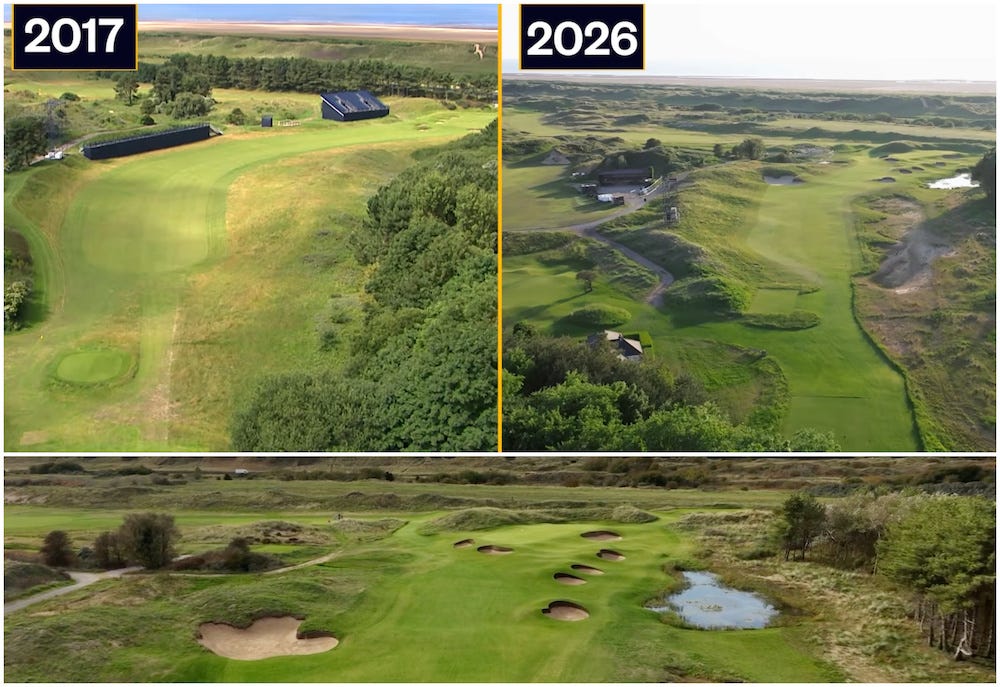
No. 7. The shortened par-3 has seen a 45-degree change in angle after consolidating tees to the right-side angle. A completely new, one-meter-raised green is surrounded by accentuated tight-mow slopes. The long-time, front-left “donut” bunker has been restored to its original size.
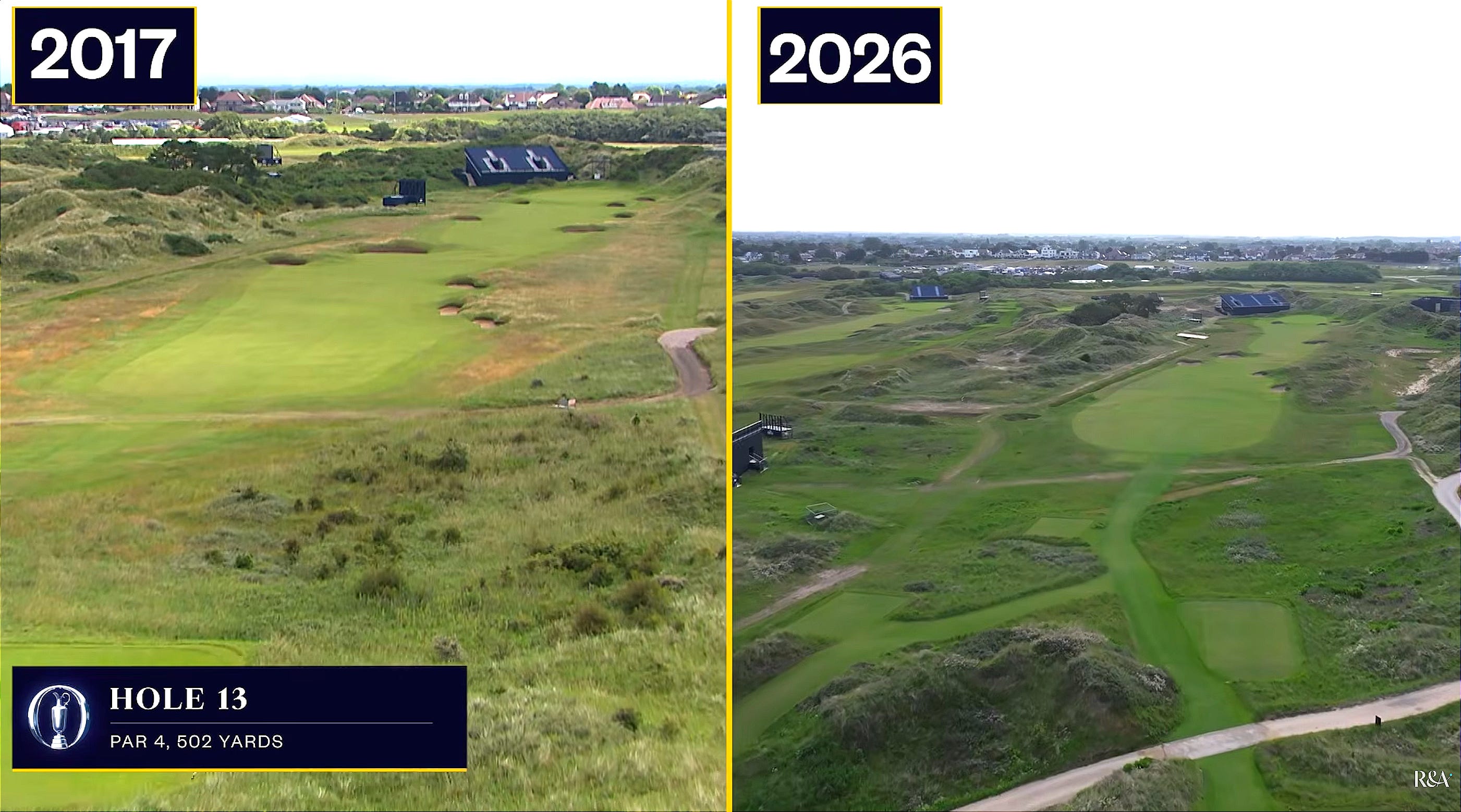
No. 13. The 502-yard par-4 saw 2017’s eventual champion need multiple officials and almost 20 minutes to sort a complicated unplayable lie situation (to be revisited in The Quad this weekend). Several changes look like nice improvements to an already fantastic hole:
A new left tee added to restore the original playing line.
Restoration of the fairway to the left-hand ditch to bring the hazard into play.
Righthand fairway bunkers shifted to reward 300-yard and left-hand cross bunker reduced to reward longer tee shots.
Expanded short grass around the green and fronting bunker pushed closer to the surface to create a stronger front right hole location, rewarding drives down the left.
Creation of a new dune line further separating the hole and club practice area where Spieth’s drop took place. 🤔
Old No. 14. The par-3 has been turned into a practice area for members.
New No. 14/Old No. 15. The robustly bunkered fourteenth was shifted “a fairway’s width” to the right of the former par-5 fifteenth. The lay-up area bunkering of old No. 15 inspired the new hole lay-up area and green complex, including retention of the more extreme undulations on the property. In a rarity for modern golf, the lay-up may matter. At 602 yards into the prevailing wind, even today’s Adonis’s might not be able to get home in two shots.
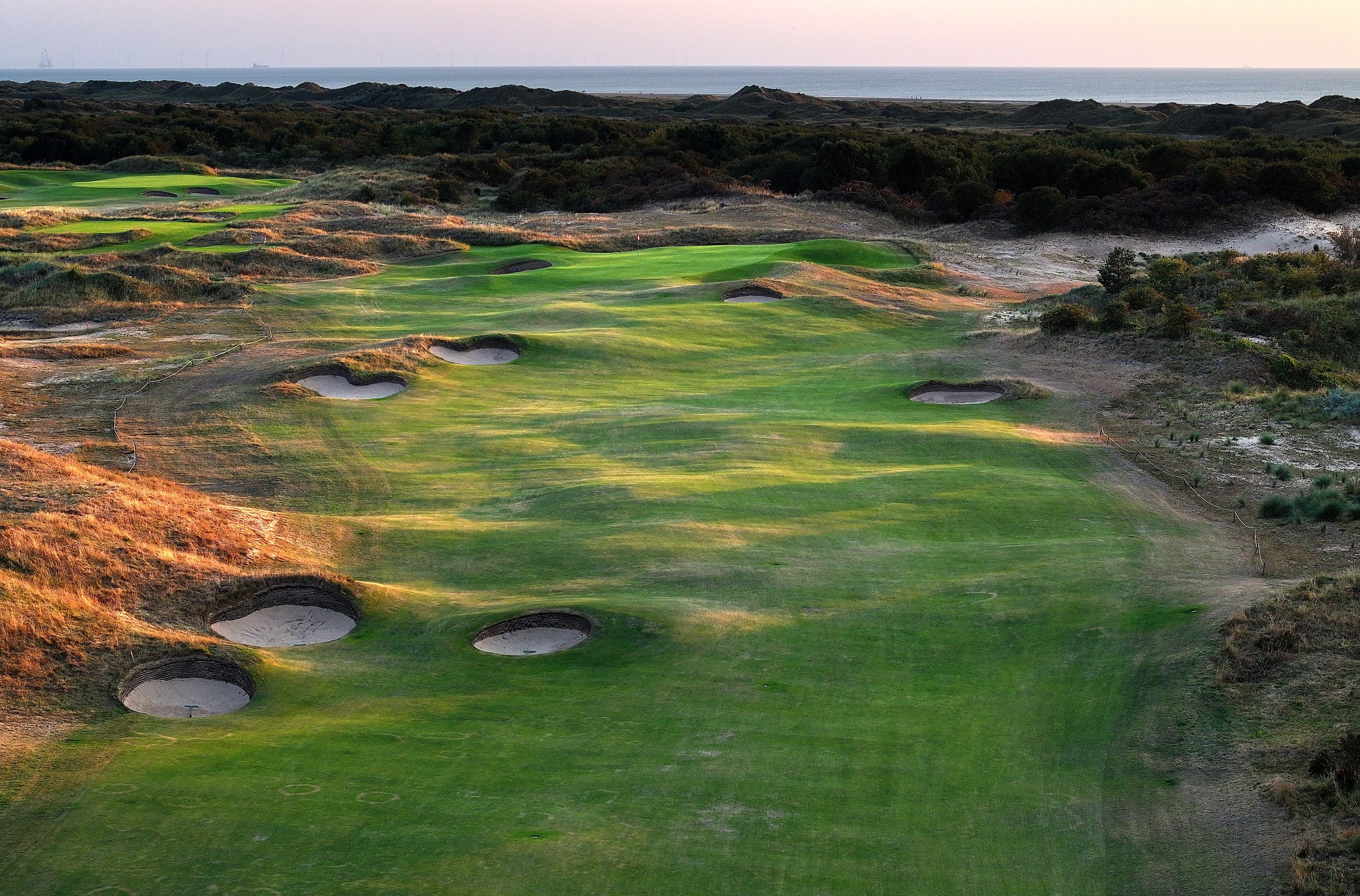
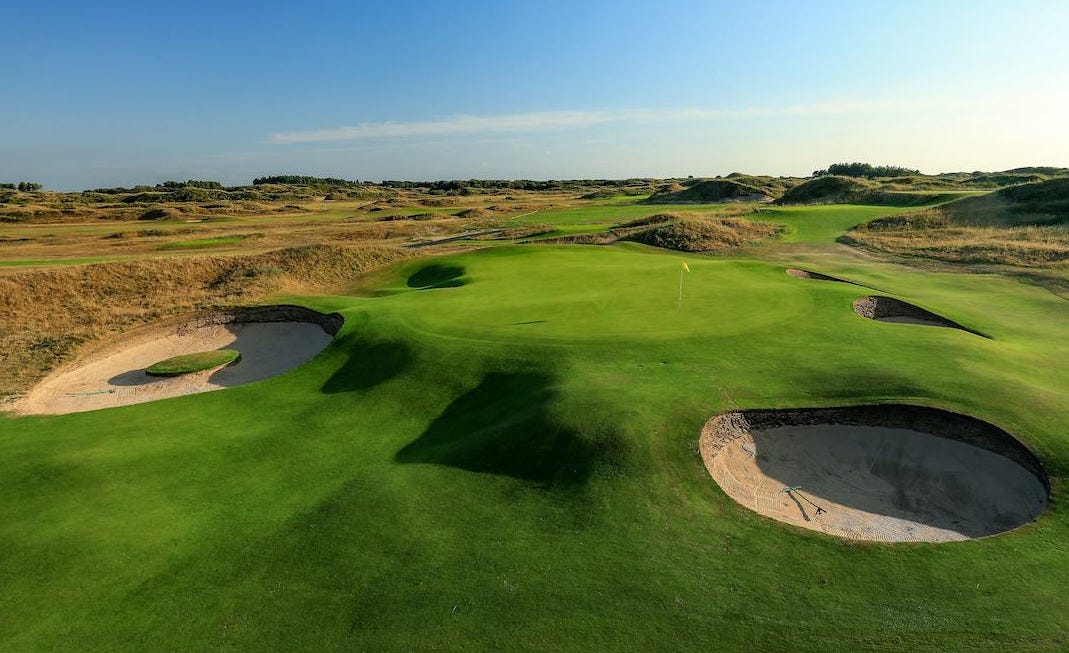
New No. 15. The entirely new 241-yard par-3 fifteenth plays down the prevailing wind and in a different direction to Nos. 4, 7 and 12. While the word “Redan” has not appeared in any official descriptions, Mackenzie & Ebert emphasize the ample opportunity to run the ball up in contrast to the other one-shotters. The right-to-left angled green is raised and slopes slightly away from the golfers. The hole features two bunkers left and tight-mow all around.
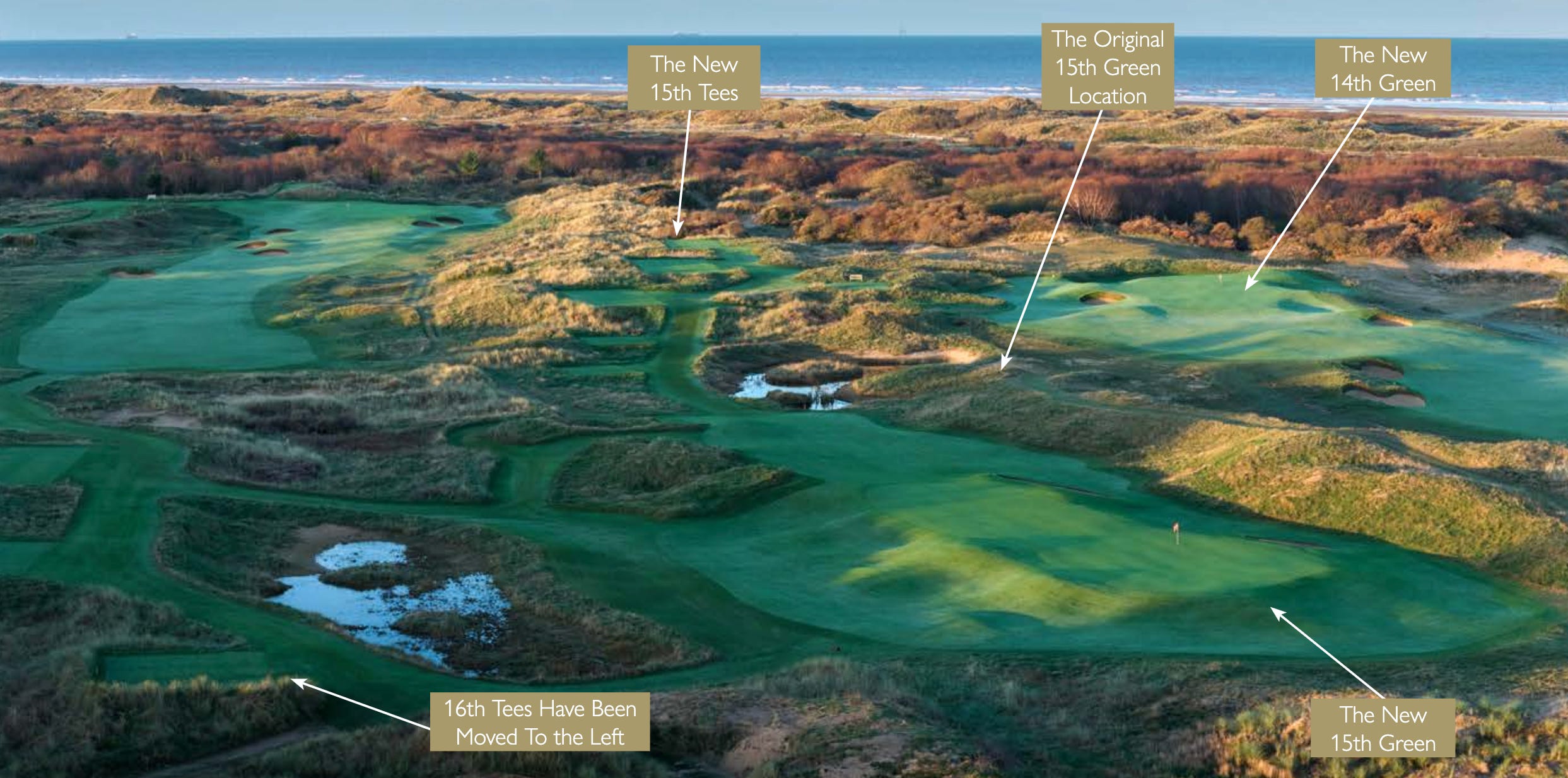
No. 16. In a world where courses are constantly lengthened, it’s striking to see the par-4 16th playing 45 yards shorter with three fewer bunkers and poor Arnold Palmer’s five-iron plaque a relic of another era. The green has been reduced a bit in size, with steeper sides and mounding to the rear eliminated. It’s expected that the R&A will explore playing the 393-yard hole from one of the shorter tees depending on conditions.
No. 18. The 566-yard 17th has seen numerous tweaks, but it’s the closing hole that will have more backbone this time around. The tee shot has been consolidated to one option (from the left). Six fairway bunkers (up from five) have been subtly repositioned in the 330-350 range to make players think twice about bombing away with the big stick.
Birkdale Quotable
Standing within a glorious expanse of dunes on the Lancashire coast, Royal Birkdale has been the setting for more championships and international matches than any other British course since the end of World War II—not even St Andrews has been as richly endowed. Without the variety of Muirfield or [Royal County Down], the charm of St George’s or the subtleties of St Andrews, Birkdale has nonetheless tested the mighty and produced champions of enduring stature. Pat Ward-Thomas
Many of the tees are high up on the sand hills, exposed to the full fury of winds that steadily lash the area. Others are comparatively sheltered, but when the ball soars up from the shelter, it receives a sudden, mighty buffeting, and unless it is perfectly struck, it will be carried far off line into that ferocious scrub bordering the fairways. Henry Longhurst
The great panorama of hills is most beautiful, and to sit on the top of one of them in the sunshine and see the cloud shadows flitting across that noble expanse is one of the pleasantest things in life. Bernard Darwin
Royal Birkdale...lies only two sneezes and three coughing spells from the redbrick seaside town of Southport, England, where people go to enjoy the icy mist and sit on beach chairs in the mud and stare at incoming squalls. Dan Jenkins
The Clubhouse
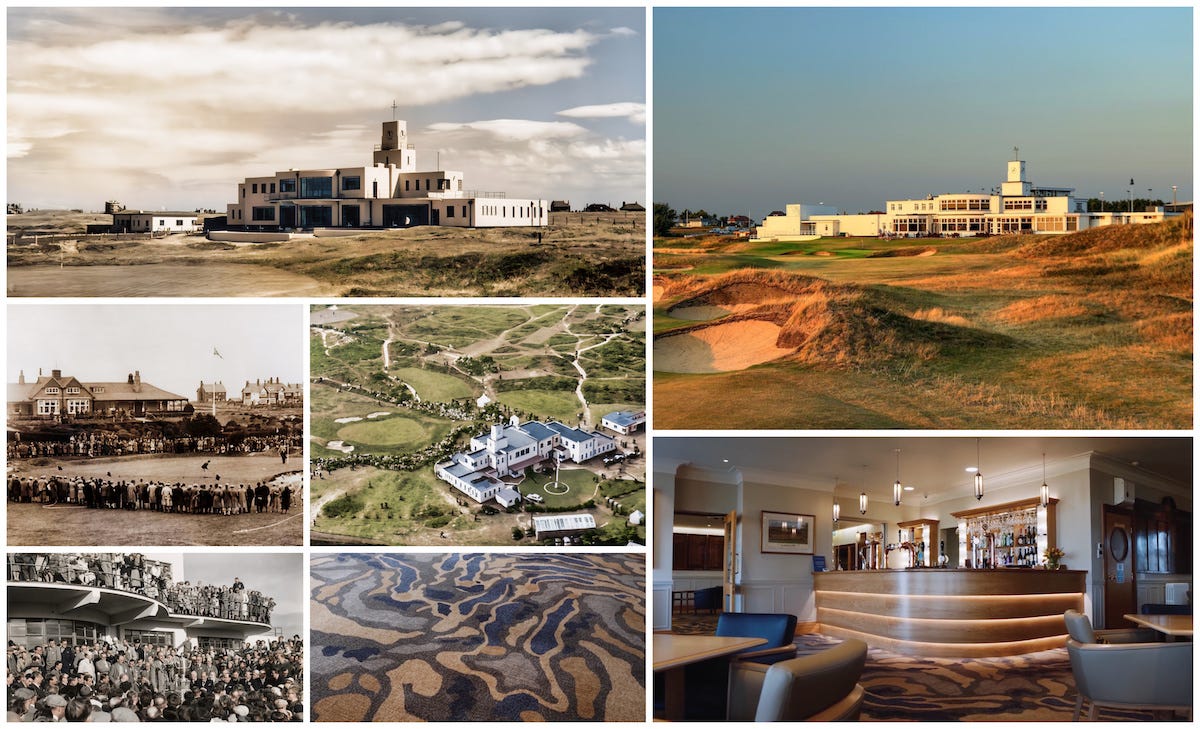
After its first 40 years using a traditional-looking form of English architecture, the club held a design competition and settled on local architect George Tonge’s vision for a modernist Art Deco cinder-block structure.
“I visualized the kind of clubhouse that I thought should intrude itself onto this lovely course,” Tongue said. “I imagined the lines of a liner at sea.”
When officially opened on July 6, 1935, the main doors were unlocked with a gold key, the Mayor of Southport blessed the £10,000 clubhouse, and various local papers noted how the edifice was reminiscent of a ship thanks to elongated white walls, set-back stories, large “sun trap” windows, and an upper deck where “deck tennis” could be played.
While the storied structure has seen several additions and extensions since Tonge’s day, the gist of his vision remains down to the working clock atop the homage to a steamship chimney. The only feature lost to time? Members and guests convening on the “decks” for trophy ceremonies to award the Claret Jug, Walker and Curtis Cups.
A clubhouse refurbishment was completed in February 2020, where several lost Art Deco elements were returned. Among the elements added: a new bar inspired by the clubhouse shape and an abstract carpet pattern designed to mimic an overhead course map. One of those features has been better received than the other.
Viewing
Thanks again to H&B for supporting this Course Preview and all who kindly answered my Birkdale. The Quad will be back in your inboxes just about every day over the next two weeks as we prepare to crown the Champion Golfer of the Year and wrap up a terrific 2026 major season.
Cheers,
Geoff
It certainly flew under Geoff's radar but there is some interesting Champions/PGA Tour news
https://www.espn.com/golf/story?id=49241212&_slug_=sony-open-waialae-cc-now-pga-tour-champions-event
Sony goes from sponsoring a high profile PGA event to sponsoring a Champions Tour start up. Why would they do that?
I don't like the direction PGA Tour is going. Their management stinks and there are almost no players I give a hoot about. I barely turn on the non-majors any more.
Terrific summary. I love reading about the history of these old clubs, and no one does it like Professor Quad. My favorite detail is the Artisans, and what a great idea that is. (Or not - I'm picturing Mrs. Miniver's terrifying mother-in-law lording it over the fictitious English town of Belham in 1940, stiffing the prols after a round, whose only access to the private course is caddying or working for the superintendant filling divots. If you haven't seen movie, it's on TCM four times a year. Great movie and the best WW2 propaganda movie ever made.) Anyway, I think it's brilliant. I've already sent an email with the "Replace Your Divot" ditty to our club pro, and I'm thinking of having a sign engraved with the poem and surreptiously hanging it on the tree at the first tee. Looking forward to following the Quad over the next thirteen long and langourous days, the best of summertime in the northeast.