
Course Preview: Bel-Air
The Curtis Cup host arrives at one of the game's most incredible settings featuring a Swinging Bridge, ingenious design, and some of the world's most expensive real estate.

The 44th Curtis Cup matches arrive in Southern California for the first time and only the second playing in the Golden State. Great Britain & Ireland will be bringing the cup to Bel-Air Country Club after prevailing in a thrilling battle at Sunningdale two years ago. Matches begin Friday morning with Four-Balls on a George Thomas and Billy Bell-designed course packed with history, intrigue, and some of the world’s priciest real estate.


Check out the Father’s Day Gift Guide and all of the latest in classic styles featuring a modern fit. Plus, complimentary domestic shipping through 6/10 at Holderness & Bourne.
Bel-Air By The Numbers
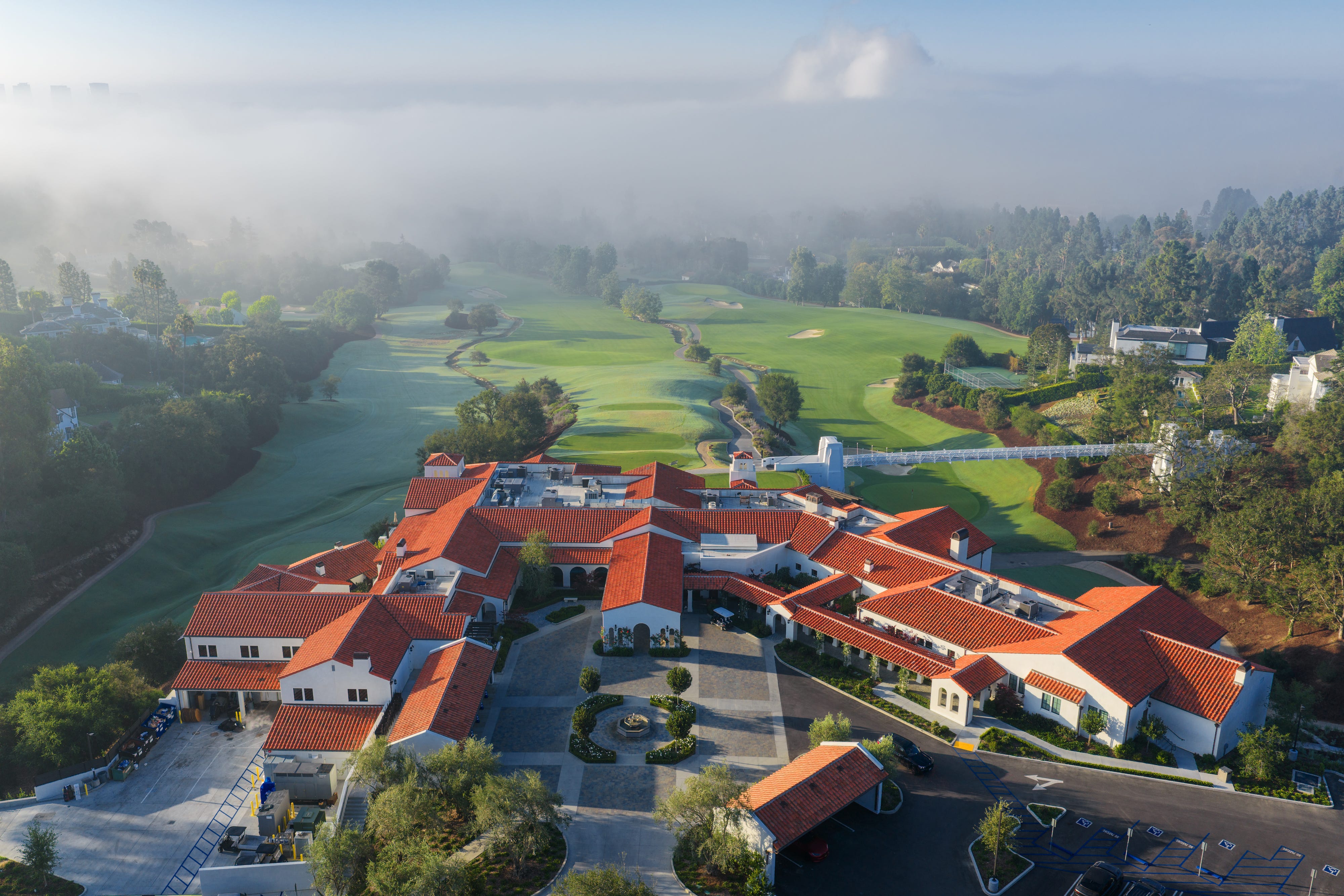
70: Par (36-34)
6,284: Yardage for the Curtis Cup
2: Original architects, George Thomas and Billy Bell
1: Consultant, Jack Neville
8: Architects who’ve worked on Bel-Air (that we know of): William Johnson, William F. Bell, Dick Wilson, George Fazio, Robert Trent Jones Jr., Tom Fazio, Jack Nicklaus, Tom Doak)
6/30/1926: Course opening date
133: Total Property Acres
4: Number of “canyons” Bel-Air plays through
44: Bunkers
1: Water Hazards
5: Number of Holes Water is in Play
653: Feet above sea level (14th tee)
594: Feet above sea level of the par-3 10th green
443: Feet above sea level of the lowest spot on the property (1st green)
5: Miles from the Pacific Ocean
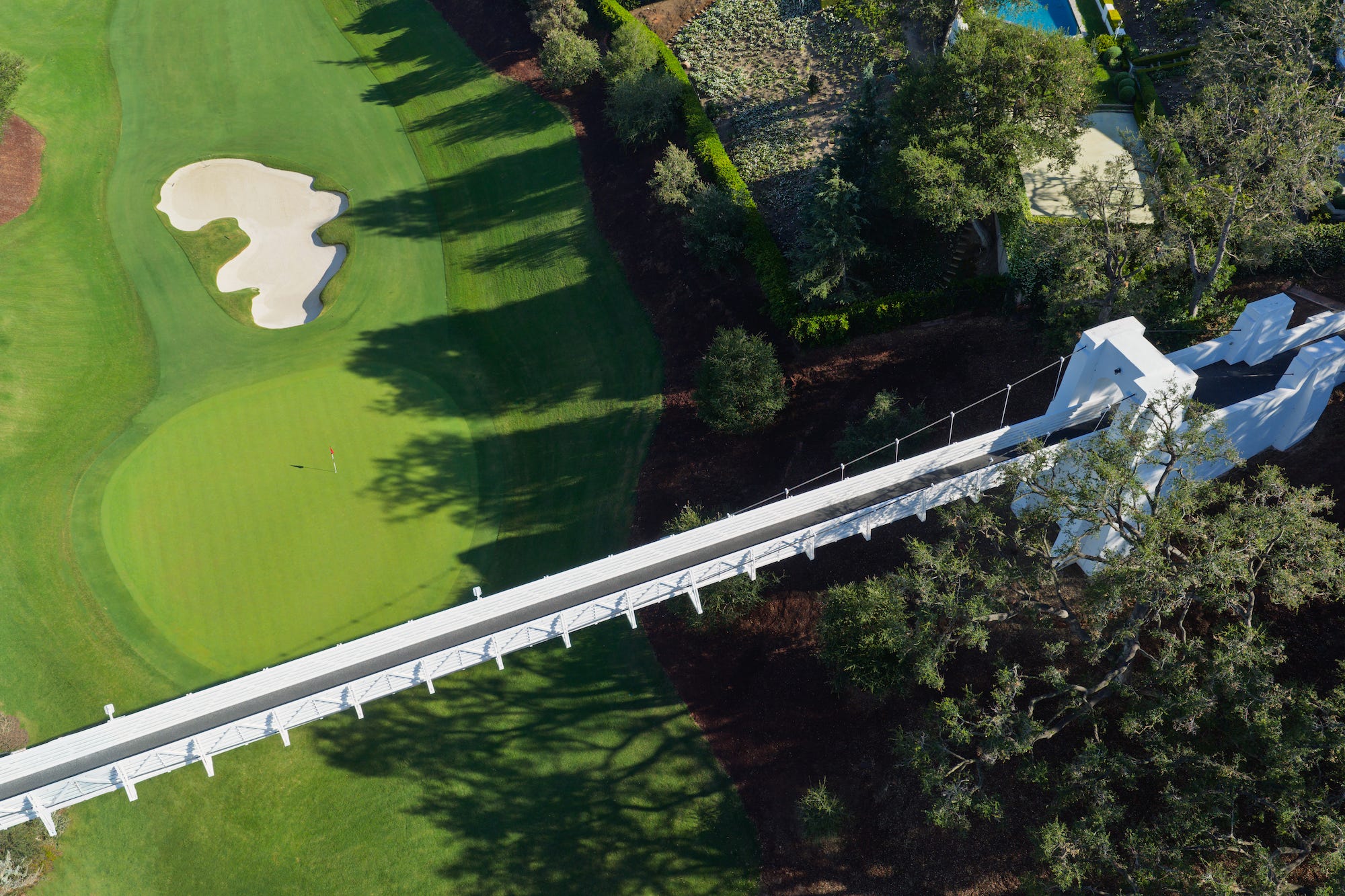
1: Swinging Bridge to reach the 10th green
1: Elevator to go from No. 9 green to No. 10 tee
4: Head professionals in club history (Joe Novak, Eddie Merrins, Dave Podas, Tom Gardner)
4: Previous USGA Championships (1976 U.S. Amateur won by Bill Sander, 2004 U.S. Senior Amateur won by Mark Bernowski, 2017 U.S. Amateur co-host, 2023 U.S. Women’s Amateur won by Megan Schofill)
Agronomy
Director of Golf Course & Grounds: Justin DePippo, GCSAA
Senior Asst. Super: Dylan DeGroot
Superintendents: Manuel Zuniga & Beatriz Chavez-Flores
Equipment Manager: Robert Garcia
Golf Course Dog (and local legend): Penny, 8-year-old Goldendoodle
Number of Employees: 36
Number of Curtis Cup Volunteers: 3
Acres of Fairway: 38
Acres of Rough: 45
Average green square footage: 5,289
Greens: Pure Distinction bentgrass cut at .105”
Green construction: Modified USGA
Stimpmeter speed: 12
Collars: Tifway II bermudagrass .350”
Tees, Fairways and Approaches: Tifway II bermudagrass .350”
Rough: Tifway II bermudagrass 2.5”
How Bel-Air Happened
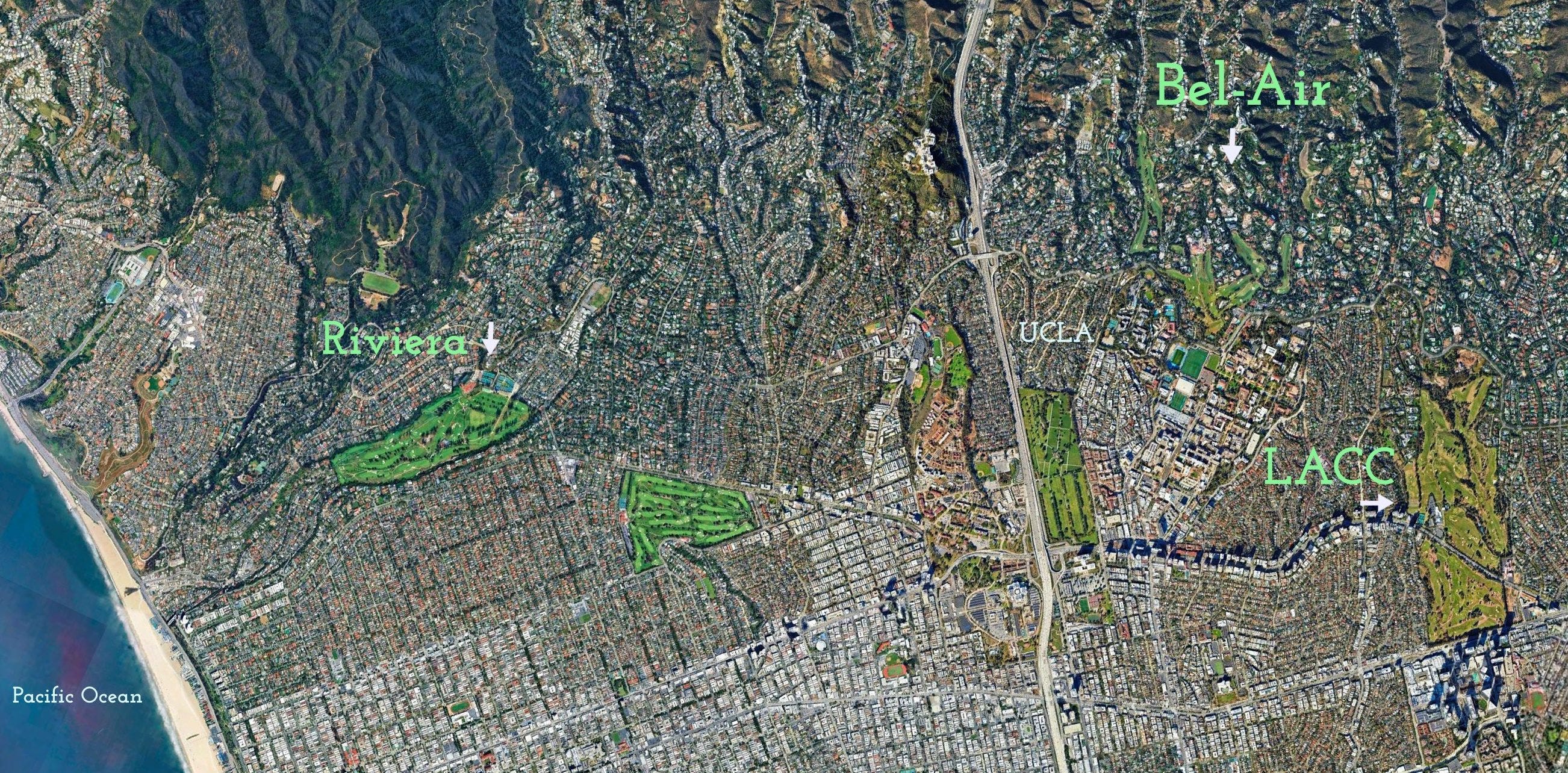
For golfers used to real estate developments maximizing lot opportunities at the expense of a Royal and Ancient game, Riviera and Bel-Air take us back to a time when speculators understood the importance of creating the best course possible. Yes, there were expectations of profiting off the grandeur created by golf architects, but a golfer never senses the pursuit of green when playing these two inextricably linked products of the roaring twenties.
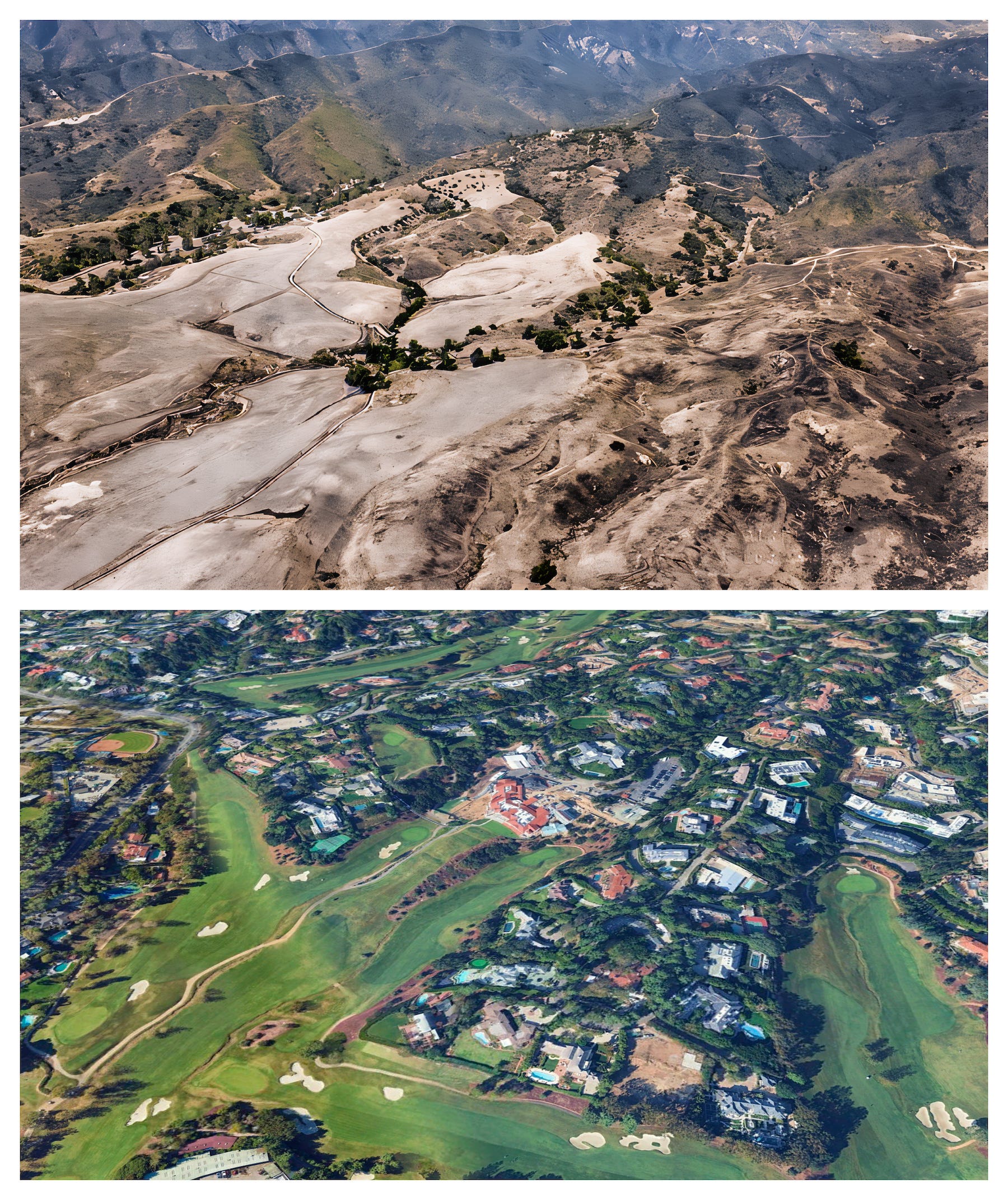
Riviera’s land consisted of an old riverbed with a significant waterway that occasionally flooded. Bel-Air was only going to take up some of the four canyons owned by Alphonso Bell. At least nine holes would venture out to flatter, less appealing ground south of the new Beverly Boulevard (now known as Sunset). But the University of California’s decision to build a new campus won out, and Bel-Air lost 75 acres of key land, reducing developer Bell’s golf course to nine holes. Since George Thomas worked for free and out of a love for the game, other projects were calling after his projects with Billy Bell at Ojai Valley Inn and La Cumbre in Santa Barbara. The architects were ready to back out.
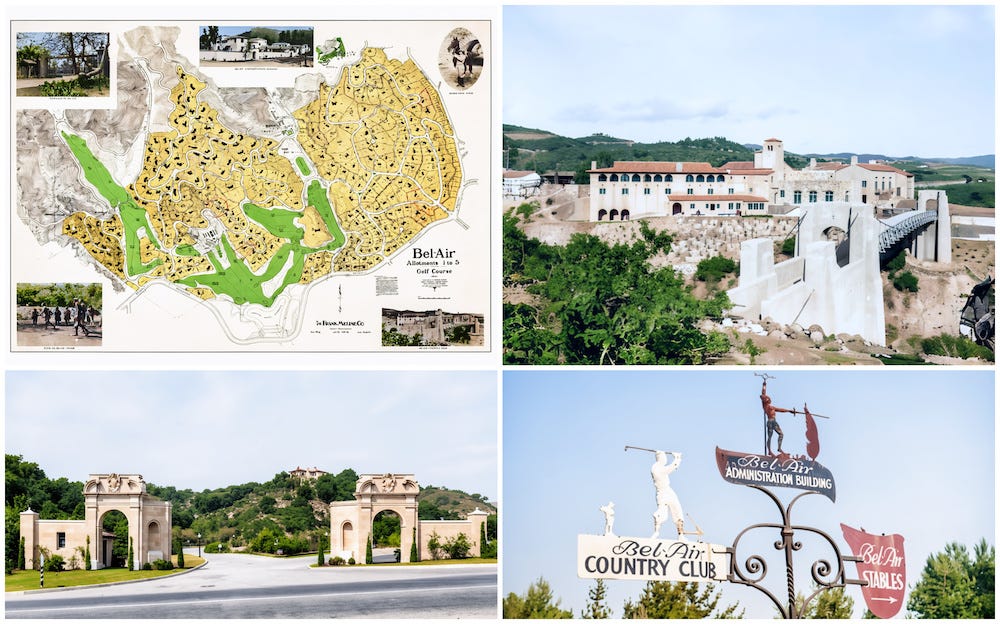
Thomas’s estate, devoted to rose hybridizing and other passions, was two miles east in Beverly Hills. He had flown the Bel-Air site in his plane and studied the ground with design co-hort/engineer/construction innovator Bell (no relation to Alphonso). They worked closely with Bel-Air’s project manager, Jack Neville, a former state amateur champion who co-designed Pebble Beach with Douglas Grant in 1919, who had paused his amateur playing career to represent Mr. Bell’s interests.
Desperate to find nine more holes after the UCLA hiccup, the trio of golf specialists arrived at an area overlooking planned hilltop development land north of Beverly. They were near the newly carved main artery through Mr. Bell’s real estate component, Bellagio Road, carved out by the Frank Meline Co. The trio surveyed a significant canyon carry to an inhospitable uphill green site. After a few shots using a putter, they determined the carry was at least 150 yards. No small feat in the era of hickories. But with a bridge and backfilling some of the canyon to shorten the carry, golfers could get to a fourth canyon owned by Alphonso Bell where a dry wash down the middle would make an ideal hazard.
By employing the western-most canyon, Thomas and Bell found seven more holes that could connect to a pair of closing holes in front of the potential clubhouse site. With that fateful putter shot over the canyon and a commitment to create a bridge for $8,000 inspired by Brooklyn’s famed span, Thomas and Bell were convinced to remain on the job as long as Mr. Bell could afford to build an increasingly pricey proposition.
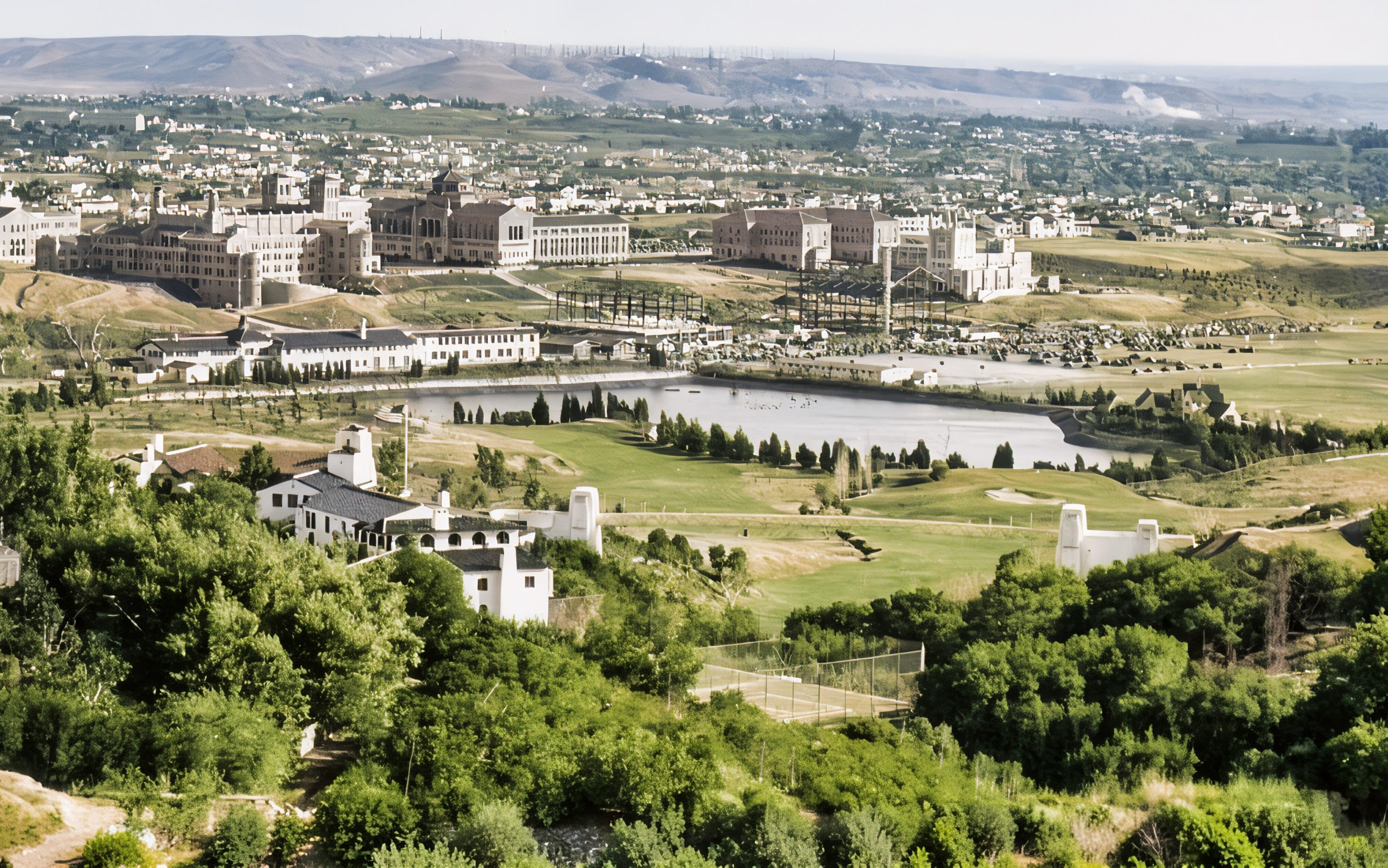
Even with UCLA coming to “Westwood” and the iconic Beverly Hills Hotel two miles away, the area was still seen as a remote part of Los Angeles. To minimize his risk, Alphonso Bell sold 400 acres of Santa Monica Canyon land to the Los Angeles Athletic Club (LAAC). The downtown club wanted to build a “countryside” course with a real estate component near the Uplifters Ranch club.William Watson was first signed on as the architect before LAAC turned to Thomas and Bell at Mr. Bell’s recommendation.
The funds from the eventual LAAC sale covered the $500,000 eventually spent to build Bel-Air, producing two of America’s greatest golf courses out of a conundrum.
Thomas’s Favorite
When researching my book on George Thomas titled The Captain, his daughter Josephine Gardner told me that Bel-Air was her father’s favorite design accomplishment. She became a fine golfer who played at Los Angeles Country Club for many years, and while she had very few specific recollections about design thoughts, one time her father randomly mentioned something that she never forgot: he was most proud of what they created at Bel-Air.
She carried that memory for decades, and when Bel-Air was radically altered by Dick Wilson in 1962, Mrs. Gardner stopped using the family membership and never went back.
I still remember pressing her on why he picked it over many other fine works with Billy Bell, including the overhaul of LACC’s North that she played so many times. Or what about nearby Riviera, where they transformed a river bed into a masterpiece? She said he didn’t elaborate and randomly mentioned it one night at dinner. But she agreed that his out-of-character immodesty was born from some combination of the task created by losing the original land south of Beverly, the difficulty of its canyon setting, and the eventual creation of several bold holes.
Match Friendlies
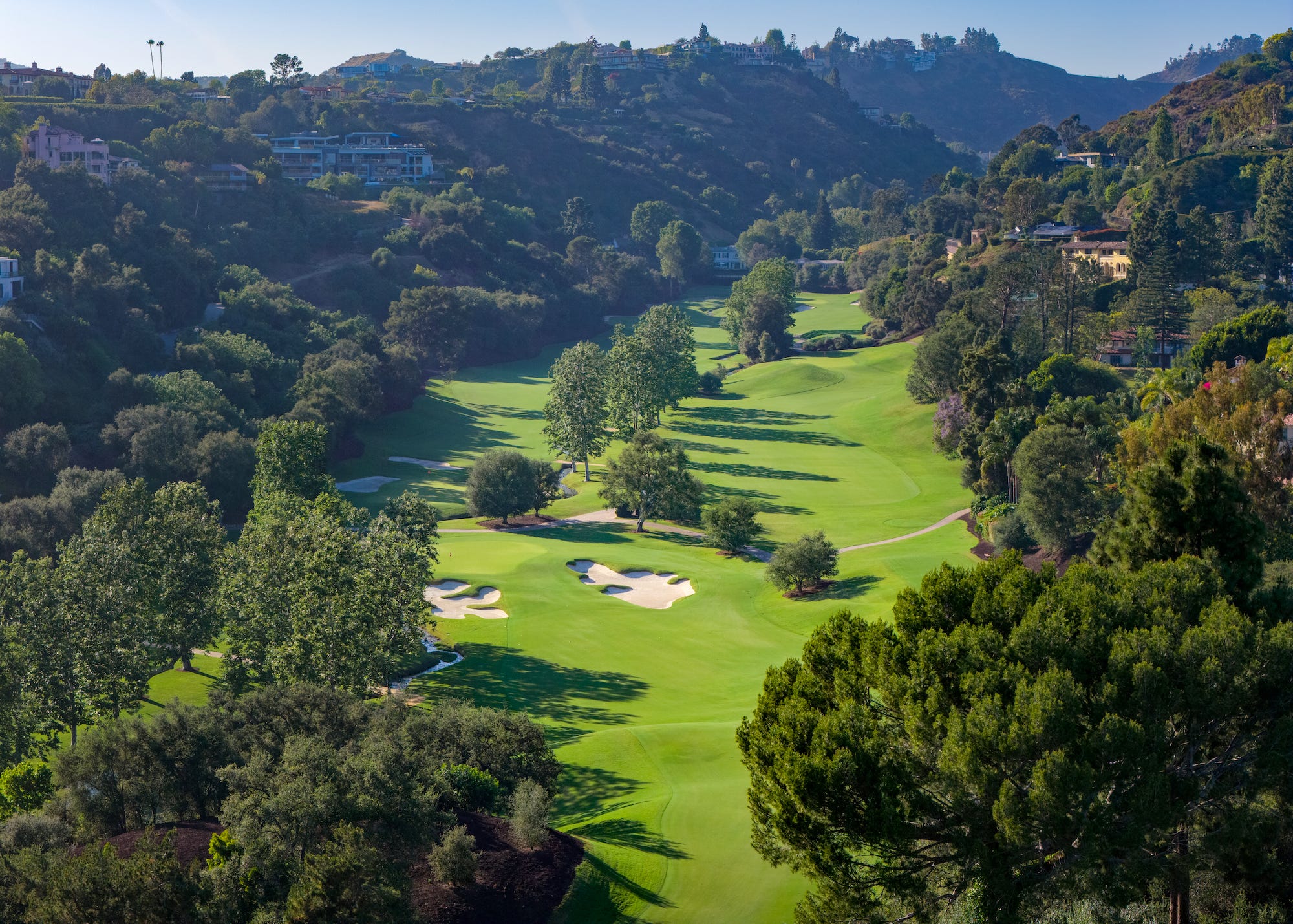
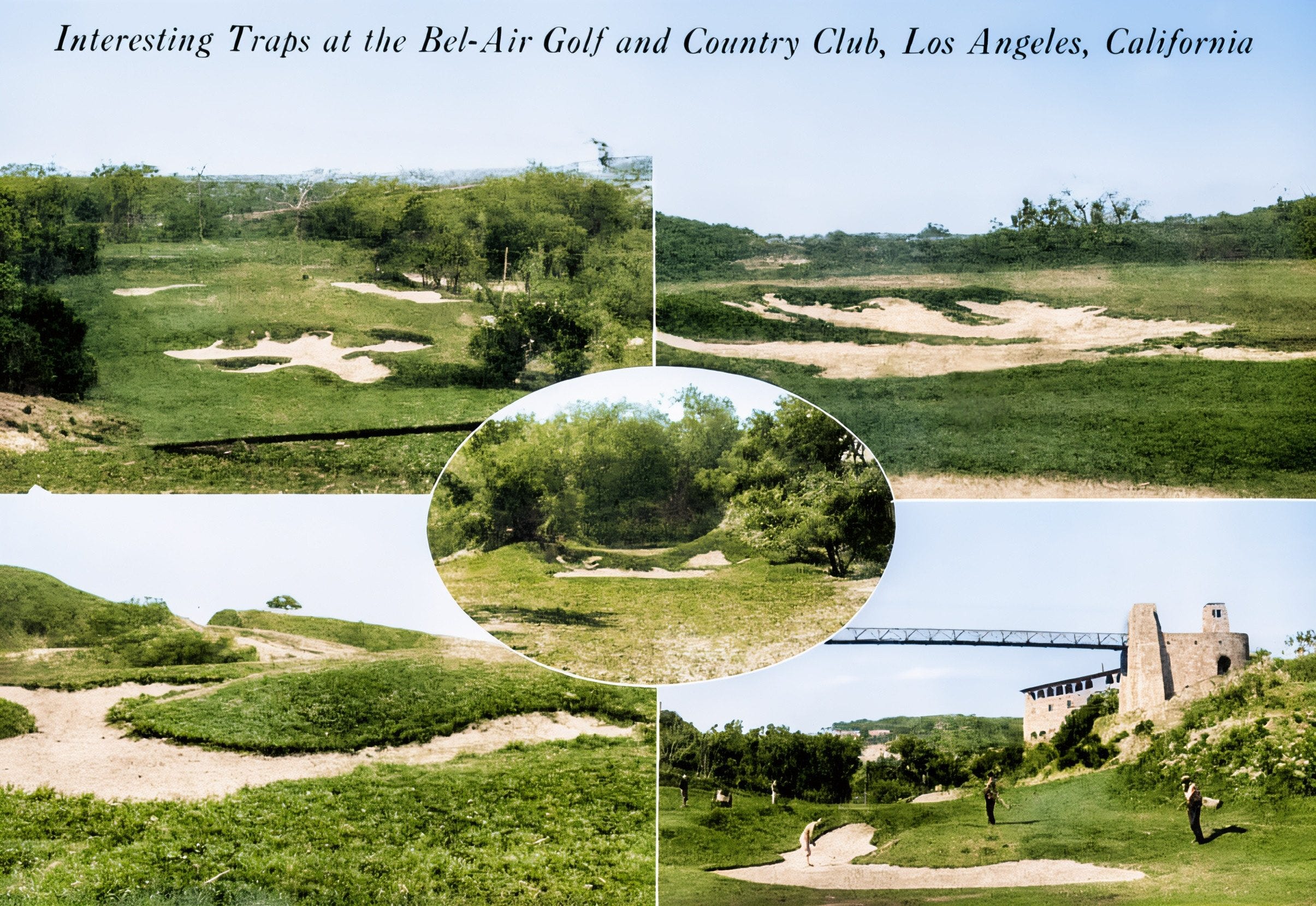
Having been deforested and seeing most of Thomas and Bell’s original design concepts return in 2017’s restoration, Bel-Air can again lure a good player into taking on too much risk. The course had become overgrown and over-manipulated through the years of change. But with lessons learned from the 2023 U.S. Women’s Amateur, restored width, and incredible conditioning, the same match volatility seen during the 2023 U.S. Women’s Amateur should continue during the Curtis Cup.
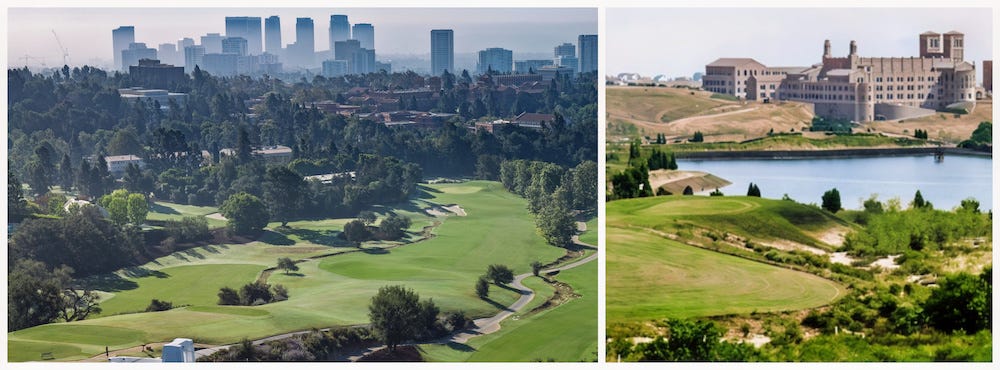
No. 1. A huge landing area helps with the inevitable nerves teeing off from high above West Los Angeles. Going for the green in two can be tricky, even with far less penalty for a right miss that existed in Thomas and Bell’s original. As with all of the best work by these two, failure to take advantage of a seemingly “easy” start can annoy even the most level-headed golfer.
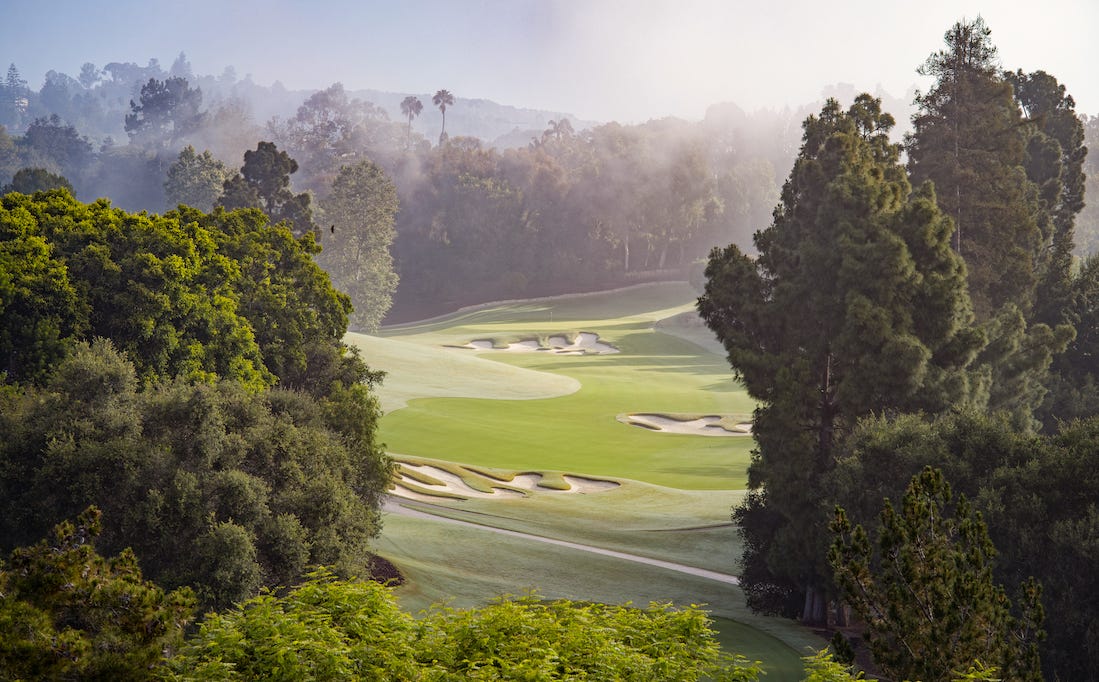
No. 2. A split fairway hole that saw many in the U.S. Women’s Amateur easily carry the centerline bunker. The long ball opens up a shorter approach to an elevated, steeply pitched green featuring a rock outcropping to the right. Tree growth has made it less tempting to bail out right and away from the centerline bunker, but there is plenty of room for those unable to make the carry. A long second from a bad angle awaits, so hopefully the setup can take advantage of the restored intrigue.
No. 8. The second par-5 on the front may be reachable in morning matches, but plays into the prevailing sea breeze as the day progresses. The long green doesn’t pitch toward the fairway as much as it looks, occasionally bringing the deadly tight-mow chipping area into play long.
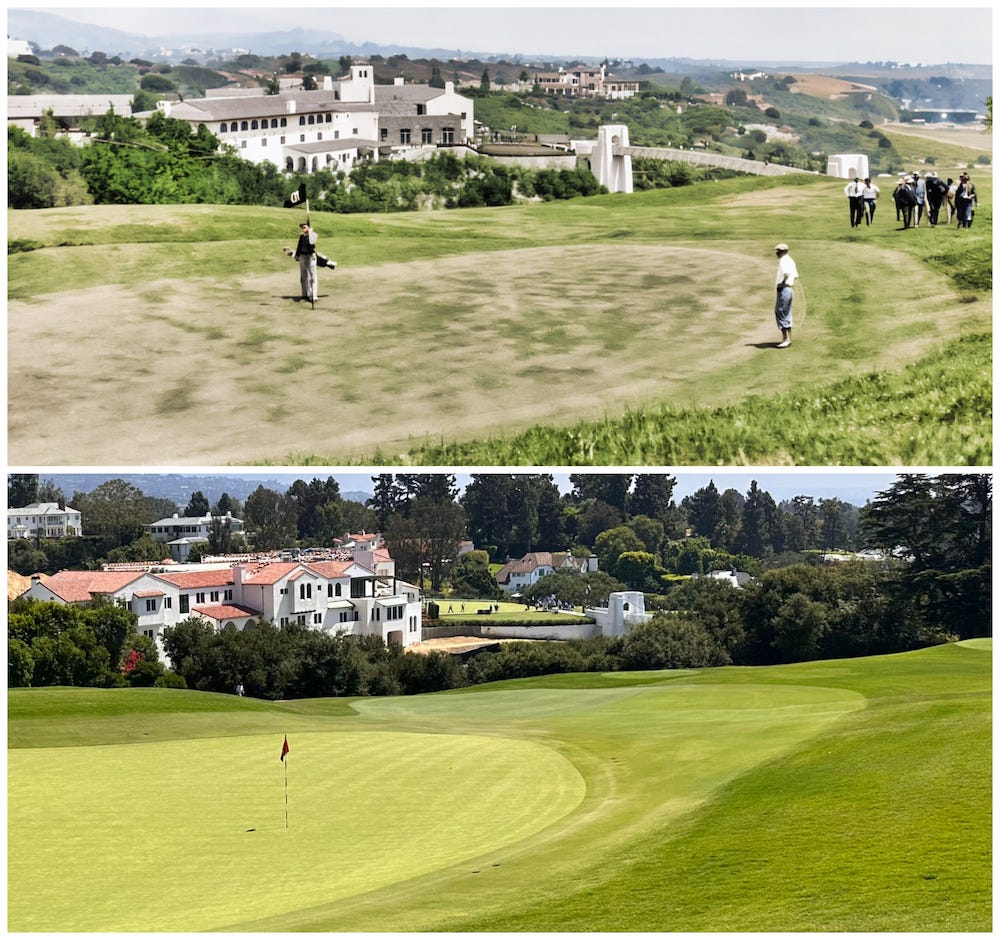
No. 10. The uphill par-3 starts with a tee set in front of a clubhouse crowd and plays 65 feet uphill to an amphitheater green. The inclination to power one up to the green and hope for help from the supporting slopes isn’t a bad one unless a hole is cut in the front of a steeply pitched green (where a lay-up isn’t so awful in match play).
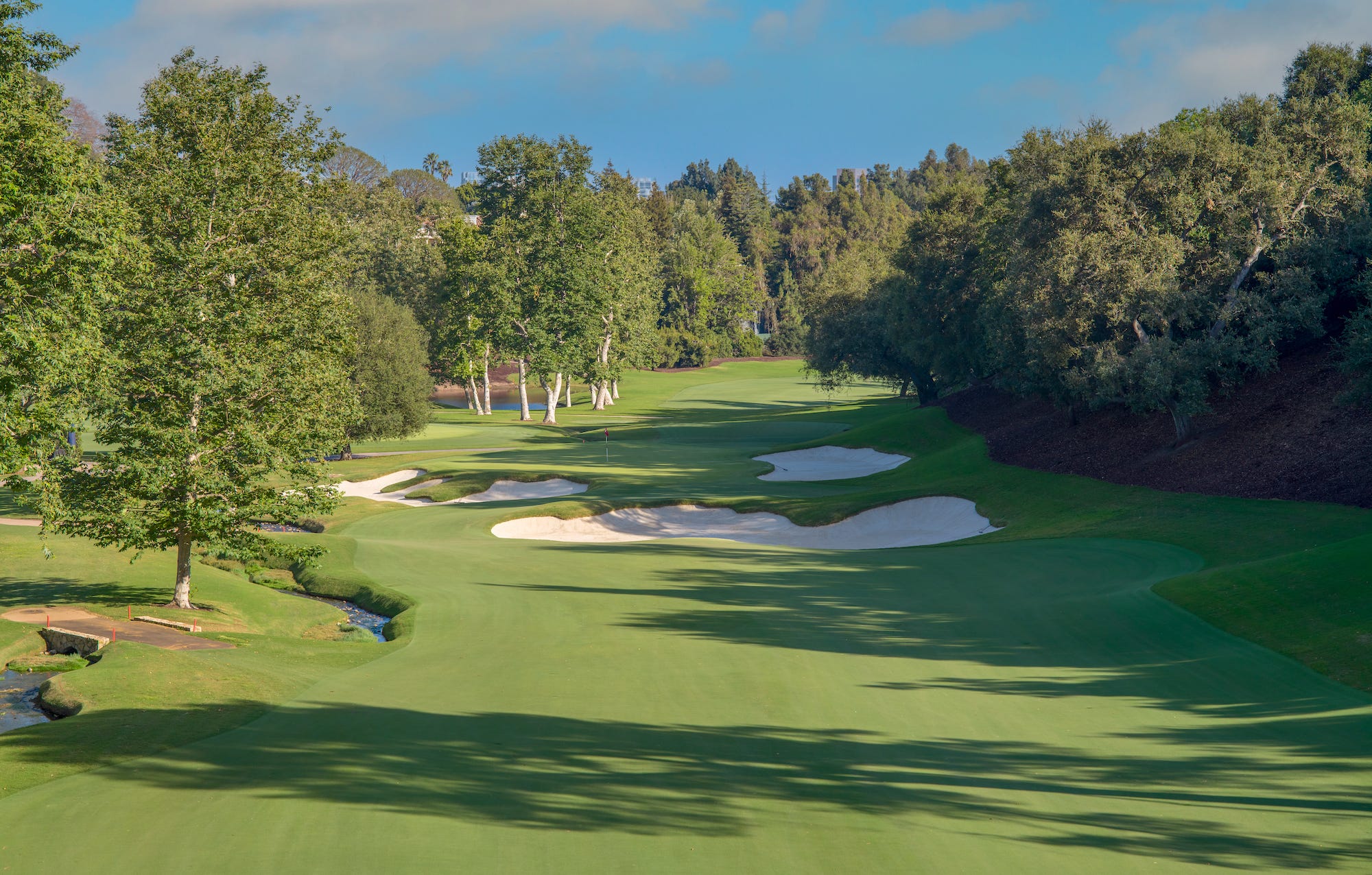
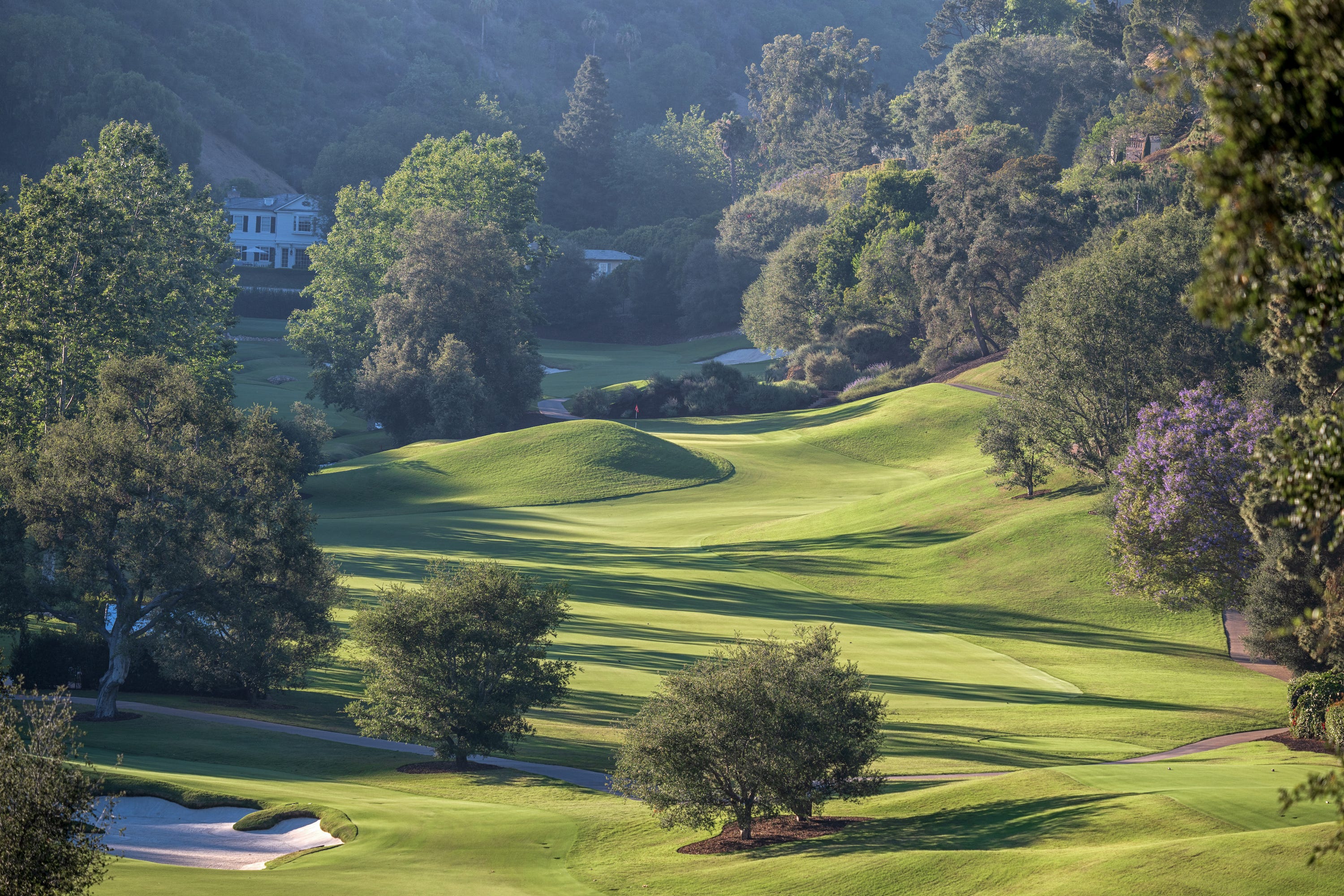
No. 14. This demanding par-5 features sage scrub canyon on the right and a recirculating creek down the left. Just because Howard Hughes once landed a plane here to catch up with Katharine Hepburn, does not mean it’s a wide landing area. A water “feature” pinches the lay-up and guards the back of a green fronted by sand and pitched gently away from players. Plenty can go wrong on any shot here, making it a pivotal hole in matches.
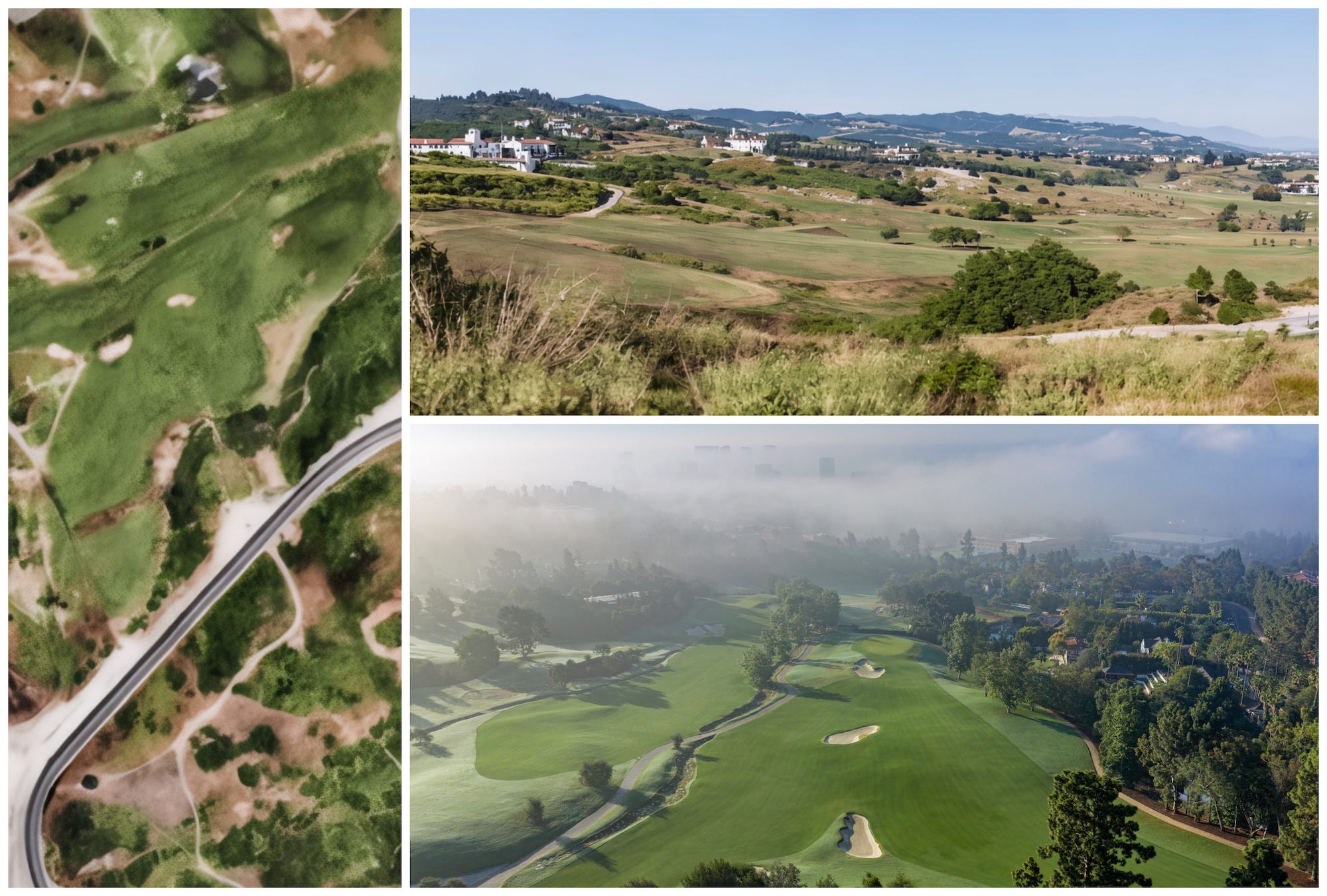
No. 17. Cited by Bobby Jones and Ben Hogan as one of the best par-4s they’d ever played, the 17th long ago lost the dramatic canyon edge effect down its right side and did not see the hazard returned in Tom Doak’s 2017 restoration. But even with more turf and less danger, the match play fun starts from high above to a landing area that can be difficult to comfortably attack due to the awkwardness of teeing high to a fairway below. The drive down the center or cutting off distance down the right sets up a shorter approach to a peninsula green surrounded by a steep drop-off on all sides.
Real Estate
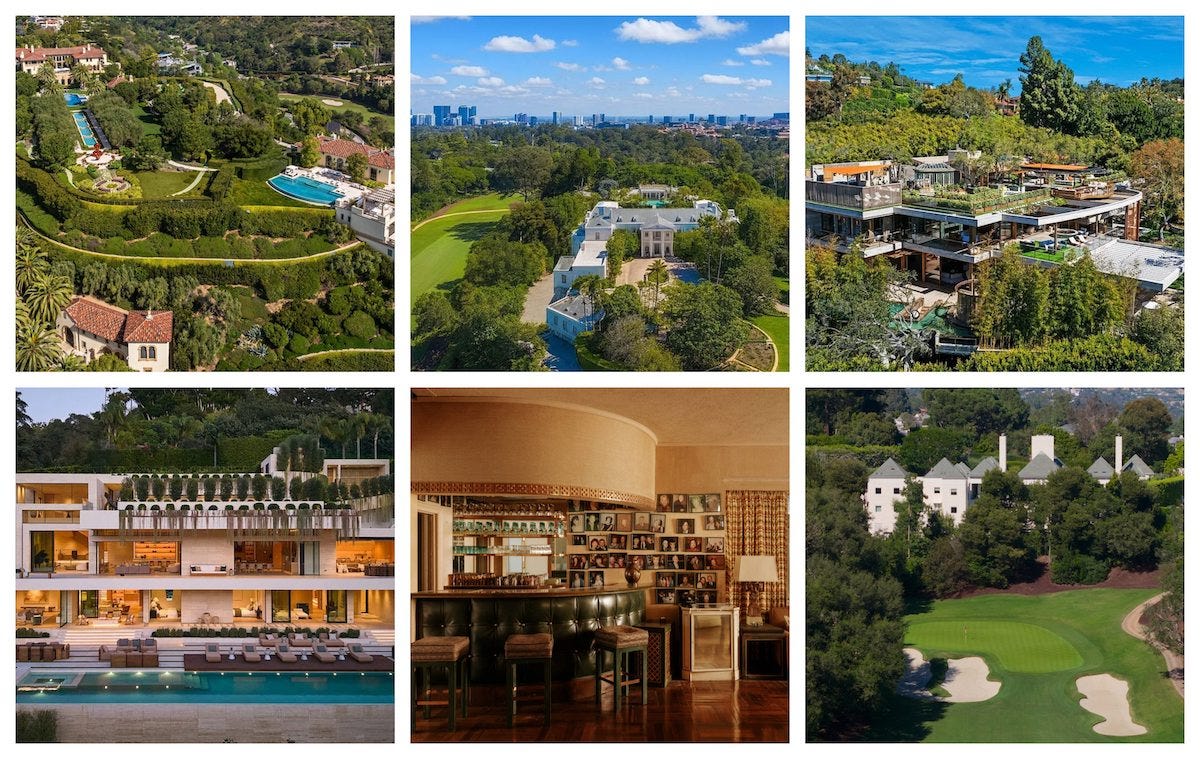
Bel-Air features some of the most expensive value-propositionally investable opportunities on the planet, with multiple properties currently searching for new buyers while the USA and GB&I duke it out on the fairways below.
For just $400 million, there’s a nice home on Chalon Road overlooking the back nine. Crafted by world-renowned architect and Village People cover band member Peter Marino, this one-of-a-kind jewel took a decade to complete on its 8-acre hilltop estate. Opened in 2018, the property features unobstructed views of Los Angeles and is close enough to hear Bel-Air’s recirculating back nine waterscape at all hours. This cozy, 70,000 square foot single-family residence is believed to be the most expensive ever constructed in the United States. The main home features 10 family bedrooms, 13 staff bedrooms with multiple pools, city views, and creatively positioned sculptures to soften a primary view staring into Westwood’s Stasi-inspired Federal Building.
At a lower price point (and what isn’t?): Casa Encantada is set atop “a fully usable 8.4-acre promontory” overlooking the city and multiple holes. If you listen closely, you can hear golfers declaring an early press at the third tee or pressing the press at the eighth immediately below this grand estate that can be yours for the low price of $170 million. Dating to 1937 and later reimagined several times, the 28,725 square foot former estate got its name from longtime owner Conrad Hilton. The home features seven bedrooms, 20 baths (with classic Hilton Triangle folding instructions included), formal and junior dining rooms, a walnut-paneled library, dual living salons, terraced rose gardens, botanical sanctuaries, orchard and herb gardens, and eastward canyon views to ponder why Tom Doak forced that unnecessary chipping area on the back left of No. 5.
If Encantada is just a tad too large, over by the sixth green at 607 Siena Way, Ardie Tavangarian commissioned his ARYA Group Inc. to design a “full-sensory experience.” Featuring 30-foot walls of glass effortlessly gliding open with precision (as one would hope for $135 million), it features a “four-story floating staircase suspended above fire and water elements” leading to an epic primary suite offering a “retractable roof for stargazing” and mosquito interactions while you rest. A 22-seat cinema, world-class wellness center featuring “a complete water-journey,” and jazz bar are among other highlights. A rooftop terrace also lets you catch and report golfers driving down the sixth fairway from the seventh tee.
Should such a full sensory experience be out of your range, 10830 Chalon’s seven-year construction has finally wrapped up to provide a $65 million option looking directly into Bel-Air’s snack bar, cart path intersection, and forward tee at No. 12. A buyer can also study the famed Mae West 12th green and ponder why Doak made the obstructed-view approach so much less hospitable than it was in Thomas and Bell’s day. Purchased for $3.4 million by a developer in 2012, this 7-bed, 11-bath resort features walls of golf-ball-proof glass, downwind scents of the smashburgers grilling at the halfway house, and soaring interiors highlighted by a climate-controlled five-car garage for the scorching 80-degree August days when it can take up to a 30 seconds for your Bentley’s air conditioning to take effect.
If old Hollywood is your thing, Casa Contenta at 10957 Bellagio Road is on the market for a more modest $13.2 million. Featuring a humble 11 bedrooms and 16 baths situated next to Bel-Air’s 15th green, this well-preserved Golden Age gem features a vintage projector for the 35 mm home theater. At the vintage bar, you can practically picture Clark Gable chatting with Audrey Hepburn about the mixed doubles match they just took over Clark Gable and Lucille Ball. I’d make fun of something about Contenta, but it just looks too cool.
Across the 15th fairway from Contenta sits The Weekend’s Abel Tesfaye’s $70 million purchase that’s not\ on the market. And Nobu’s cottage sits behind the 16th green, so it’s a creative neighborhood even without Alfred Hitchcock still around. His longtime abode at 10957 Bellagio remains visible next to the 15th tee.
Financing options are available for all of these opportunities. So don’t wait!
And enjoy the 44th Curtis Cup.
Does the real estate come with a Bel-Air membership?
If so, I might think about it. I could use a second home.
Thanks Geoff.
Love the hole by hole tour. Always been a fascinating golf course to admire from a distance.
As an aside,
“Number of Curtis Cup Volunteers: 3”
Now that seems low?