
Course Preview: Aronimink
The 2026 PGA Championship host features Donald Ross's most elaborate bunkering, tough par-3s and a potential (forced) drivable par-4.

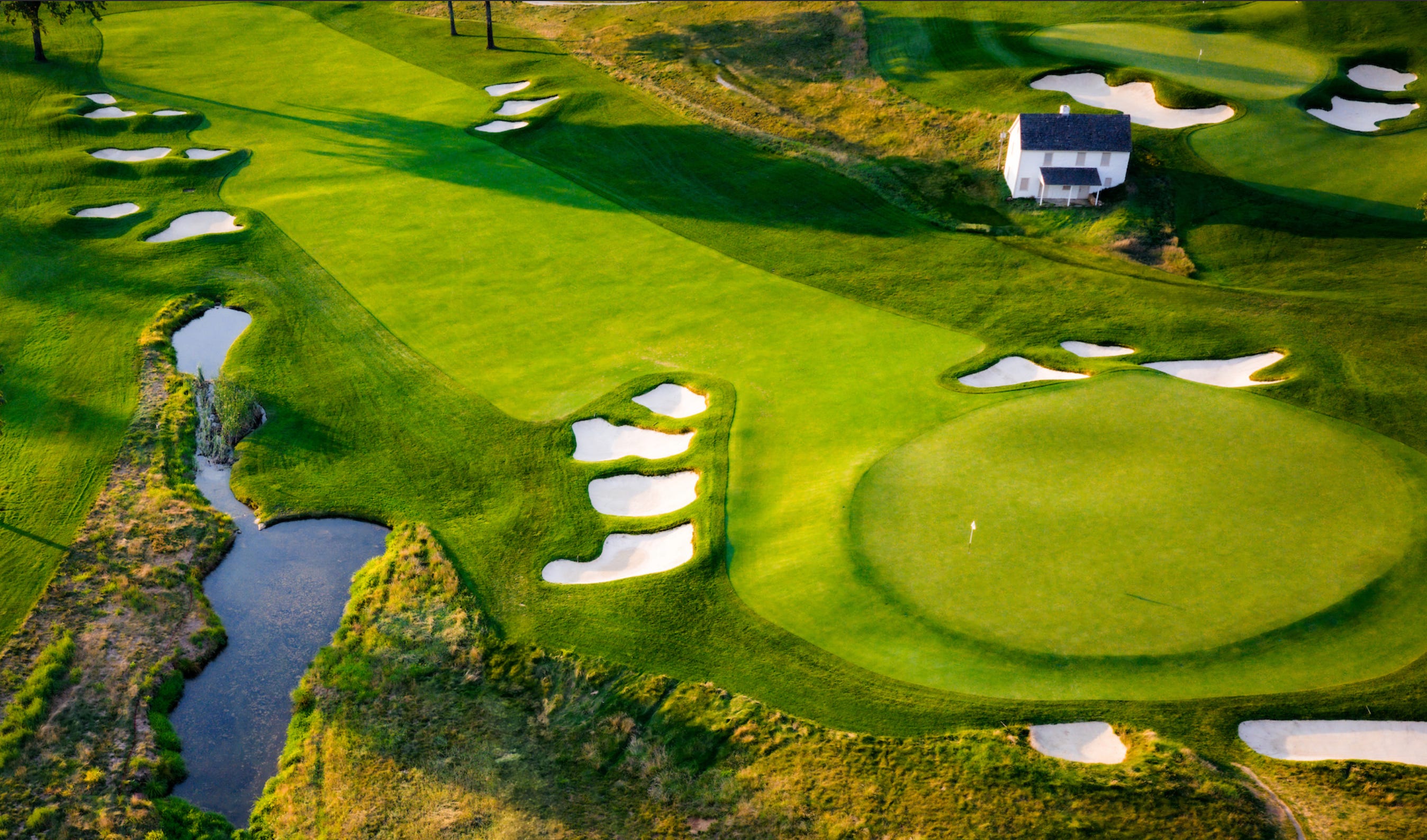
The PGA Championship returns to Aronimink Golf Club for the first time since Gary Player’s 1962 victory. The Donald Ross original featured more trees and the usual mid-century meddling that came with hosting championships back then. Now it’s all Ross and as prepared as possible to put on a good show.
This PGA can’t come soon enough following another week of pro golf shillers arguing over money, who should be welcomed back to the club after stealing the silver, who grew the game best, and other nonsense that must not distract from major championship golf’s return to architecture and history-rich Philadelphia (we can dream, anyway).
Aronimink was scheduled to host the 1993 PGA but withdrew because a seven-year waiting list rendered the club unable to meet non-discriminatory requirements after the PGA’s Shoal Creek embarrassment. The Newton Square, Pennsylvania club has since hosted a KPMG Women’s PGA and three PGA Tour events. The 2018 BMW Championship won by Keegan Bradley should theoretically give us a preview of how things might play. But the remnants of Tropical Storm Gordon forced a Monday finish. The field averaged 67.9 over a rain-drenched course. So this year’s Course Preview (again kindly supported by Holderness and Bourne) will pass on reading into those numbers. But we have plenty of better goodies to get you ready for PGA week.
Weather permitting—and it still looks good for the championship rounds—Aronimink should be a sensational venue for 2026’s second major.


H&B met up with their ambassador and Director of Golf at Aronimink Golf Club, Jeff Kiddie. They chatted about Jeff’s beginnings in the game, Gil Hanse’s restoration of the club, and Jeff’s thoughts on Philadelphia’s big summer of sports. Kiddie is a pro’s pro who came to Aronimink from Applebrooke. He kindly provided some key insights into the course later on in this Course Preview.
Check out the chat here and while there, have a look at H&B’s impressive spring collection.
Aronimink By the Numbers
70: Par
7,394: Yardage (7,280 for 2018 BMW)
1928: Opening year
6,619: Original course yardage
1: Original architect: Donald Ross
2017: Comprehensive restoration reopened (Gil Hanse/Jim Wagner)
75: Bunkers restored in 2017
7: Architects who’ve worked on Aronimink since Ross (Dick Wilson, George Fazio & Tom Fazio, Robert Trent Jones, Ron Prichard, Hanse, Wagner)
180: Bunkers (!)
20: Bunkers on the 11th hole
30: Average fairway width in yards
2: Holes where water is in play
171-242-216-229: The four par-3’s official yardages
11/2/25: Last day members played the course
5,600 sq. ft.: Fourth green (smallest)
11,000 sq. ft: 15th green (largest)
467 ft: Highest course elevation, No. 3 tee
419 ft: Lowest elevation, No. 10 green
7.8: Miles west of Merion GC, host of the 2030 U.S. Open
23: Miles west of the Liberty Bell and downtown Philadelphia
Agronomy
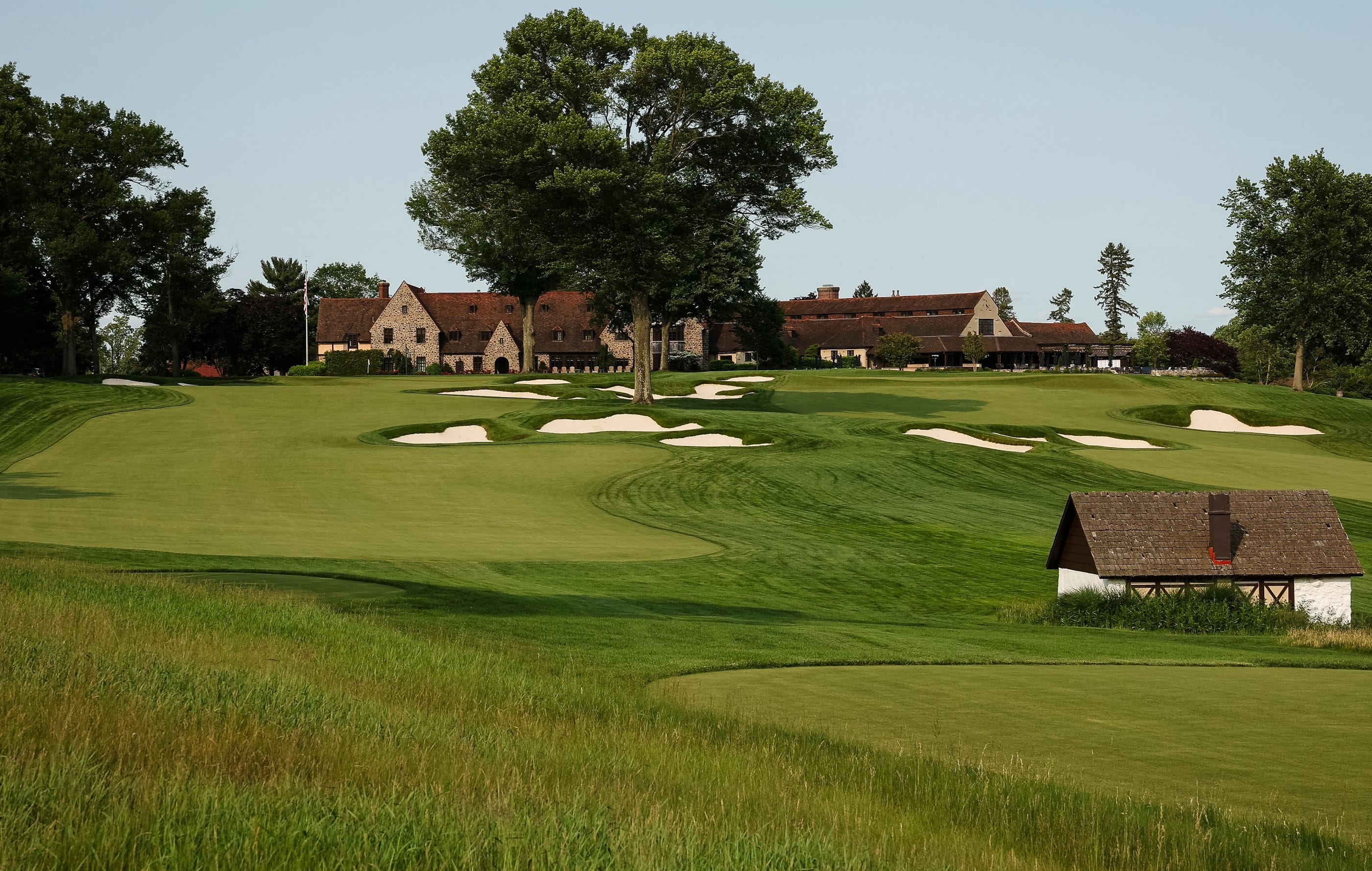
320: Total property acres
31: Acres of fairway
.375”: L-93 Bentgrass fairway height
90: Acres of rough (Tall fescue/poa annua)
.100”: A-1/A-4 Bentgrass greens mowing height
8,200 sq. ft.: Average green size
3.25”: Rough mowing height
200,000: Total square feet of sand bunkering
30: Agronomy Employees
85: Tournament Volunteers
The team:
Director of Agronomy John Gosselin, GCSAA, 20th year at Aronimink
Golf Course Superintendent: Dave Stofanak
Asst Supers: Joe Kopania, Robert Welsh, Collin Domblesky, Burke McFillin
Equipment Manager: Muhamed “Hamo” Krkbesevic
Asst. Equipment Manager Joe McCoy
Project/Irrigation Manager Rich Reimers
PGA Professional Jeff Kiddie
Champions
1962 PGA Championship: Gary Player
1977 U.S. Amateur: John Fought d. Doug Fischesser 9&8
1997 U.S. Junior Amateur: Jason Allred d. Trevor Immelman, 1 up
2003 Senior PGA Championship: John Jacobs
2010 & 2011 AT&T National: Justin Rose and Nick Watney
2018 BMW Championship: Keegan Bradley
2020 KPMG Women’s PGA Championship*: Sei Young Kim
*Aronimink becomes the first course to host the PGA’s three rotating majors.
Random
📜 Aronimink was one of the five founding members of the Golf Association of Philadelphia (1896) under the name Belmont Golf Association. The others: Merion, Philadelphia Country Club and the (Philadelphia) Cricket Club. The Belmont Golf Association was an offshoot of the Belmont Cricket Club where the founding members laid out a few rudimentary golf holes.
✏️ “Aronimink Golf Club” became the name in 1900. This year’s PGA site is the club’s fourth location. The club spent time at 54th Street and Whitby Avenue, moved to Drexel Hill in 1913 where A.W. Tillinghast helped lay out the course, before finding the current location at 3600 St Davids Road in Newtown Square.
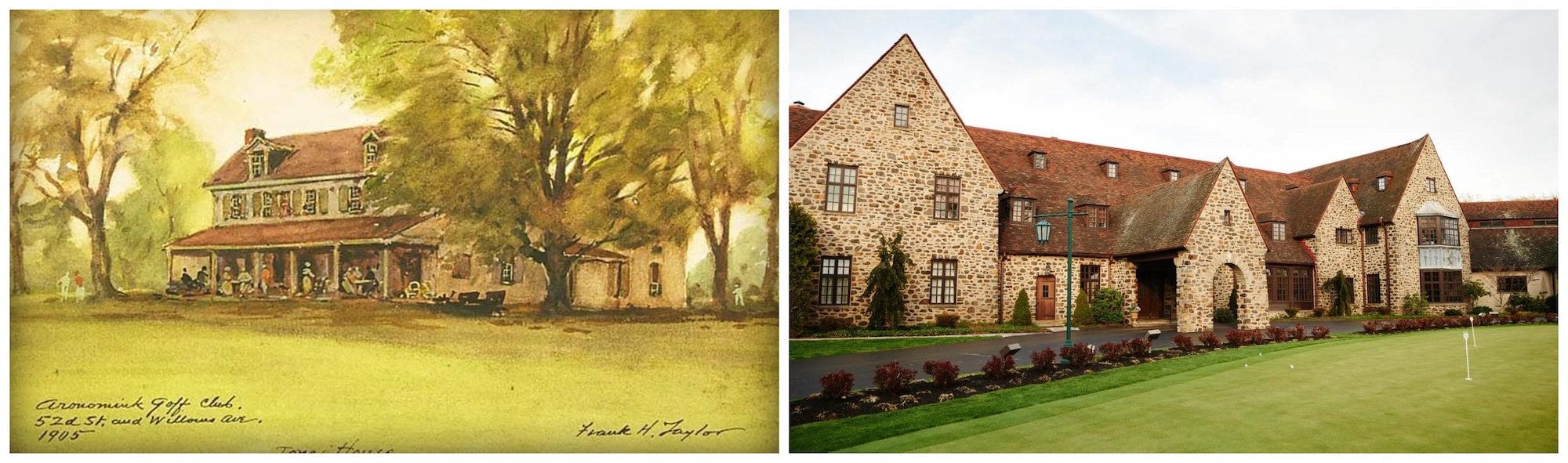
🏡 Aronimink’s current clubhouse was designed by Charles Barton Keen in association with member and architect Franklin D. Edmonds. After Keen designed “Reynolda” for R. J. Reynolds in 1913 (now a museum), Keen’s practice expanded. He covered Maine to Florida, designing residences and other notable buildings. Keen moved to Winston-Salem in 1923 after designing the clubhouse for Greensboro Country Club. A member of Pine Valley, Keen provided the plans for the club’s original clubhouse and “locker house.”
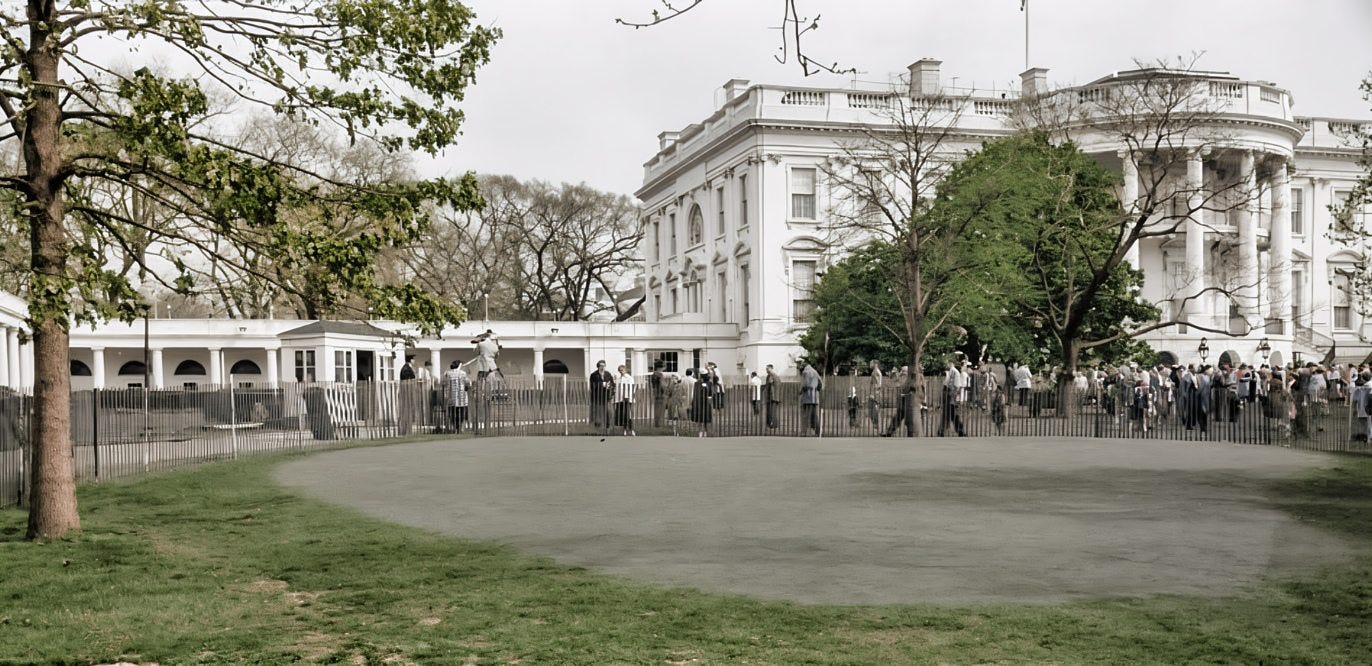
⛳️ When President Dwight D. Eisenhower installed the White House putting green in 1954, its turf came from Aronimink. The bentgrass was developed by Professor H. Burton Musser, longtime head of Penn State’s esteemed turfgrass program. The president’s brother, Milton, was president of Penn State at the time. The green was later removed by President Richard Nixon and eventually reinstalled by President Bill Clinton.
🌲 The club’s name was inspired by the Lenape people, who had ties to a home on the property that became the club’s original clubhouse. The Lenape are an indigenous people of the Northeast woodlands. They once covered a massive area from today’s Delaware to eastern Pennsylvania and north to western Long Island. Aronimink is derived from “Arronemink,” a Native American village at the mouth of Mill Creek. It may have been a reference to waterfalls, “where the fish cease.”
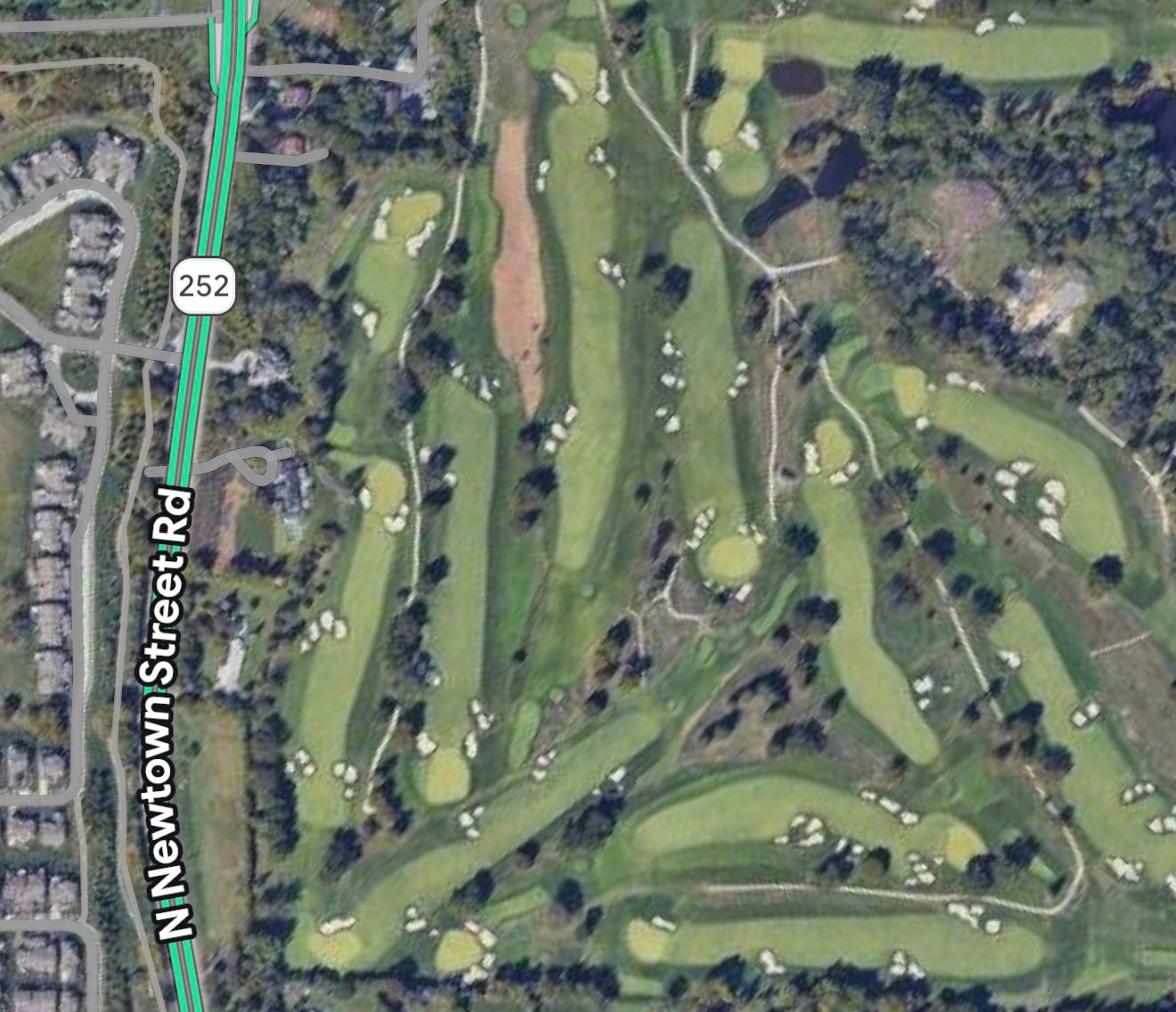
🛣️ Local caddies believe most putts break toward the southwest corner of the property and Route 252. Superintendent John Gosselin suggests this is not always the case and that players in the PGA trust their eyes. With the clubhouse at 466 feet above sea level and the fifth tee at 465 feet, the property does not appear to tilt in any perceptible direction.
Donald Ross At Aronimink
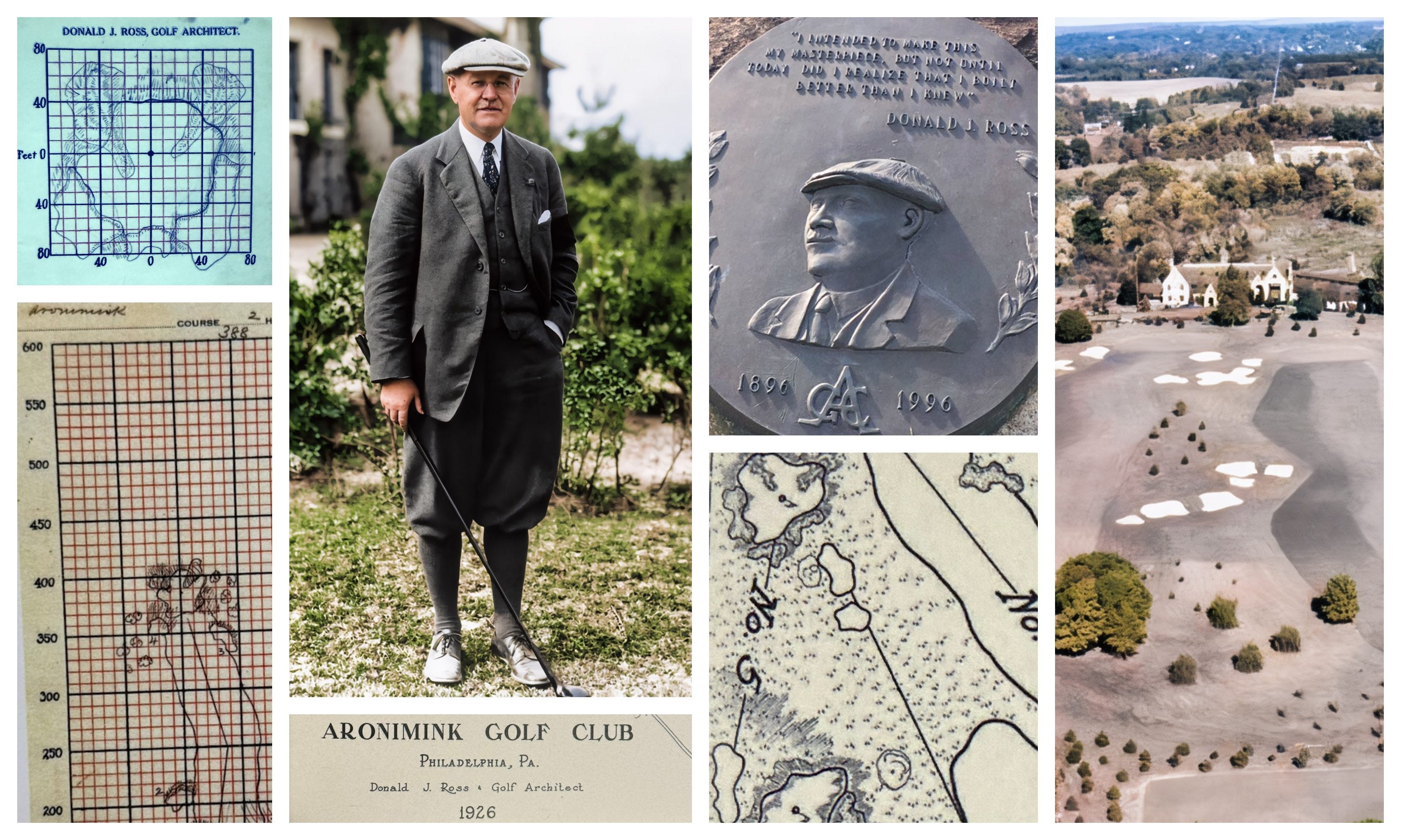
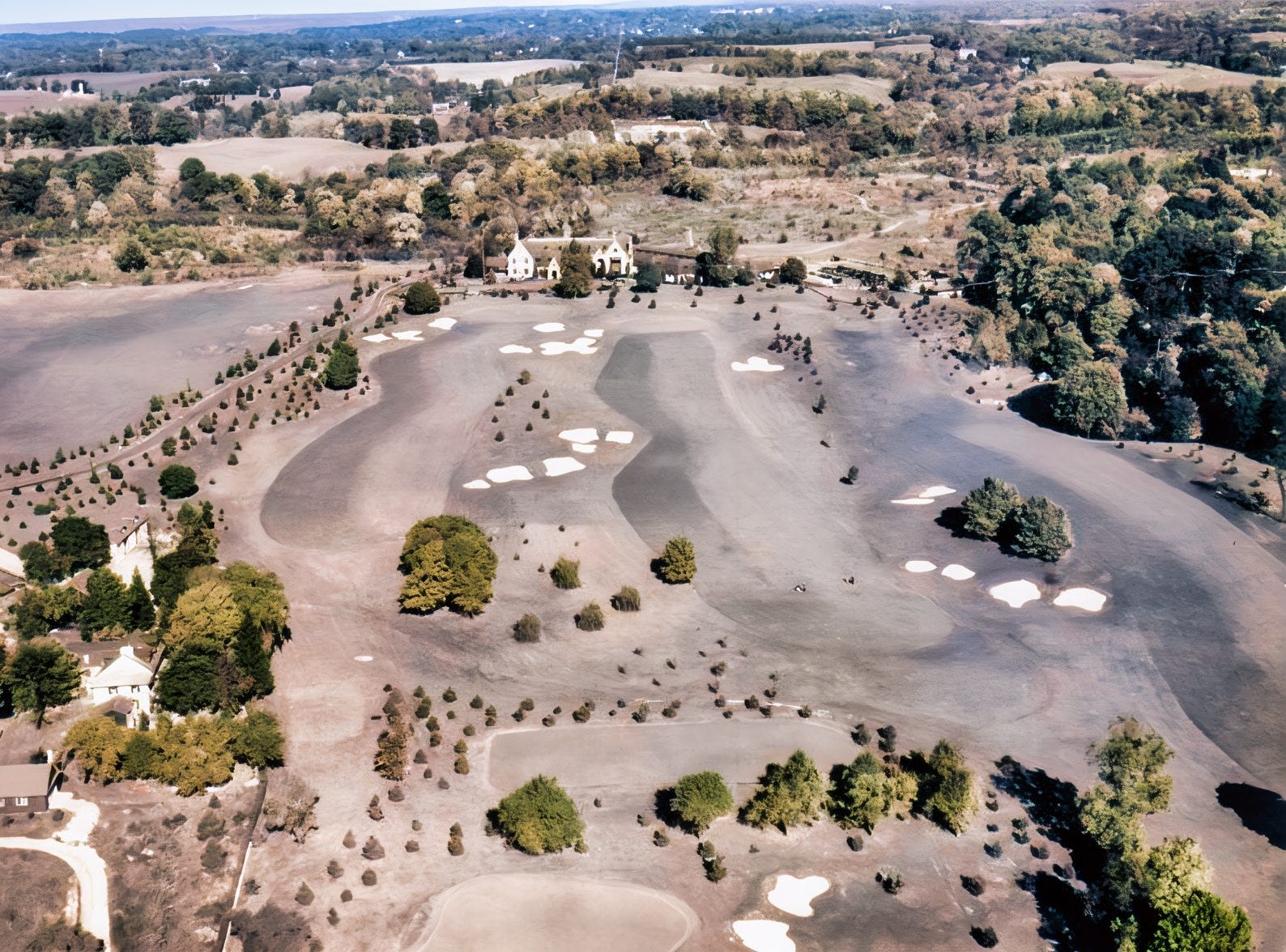
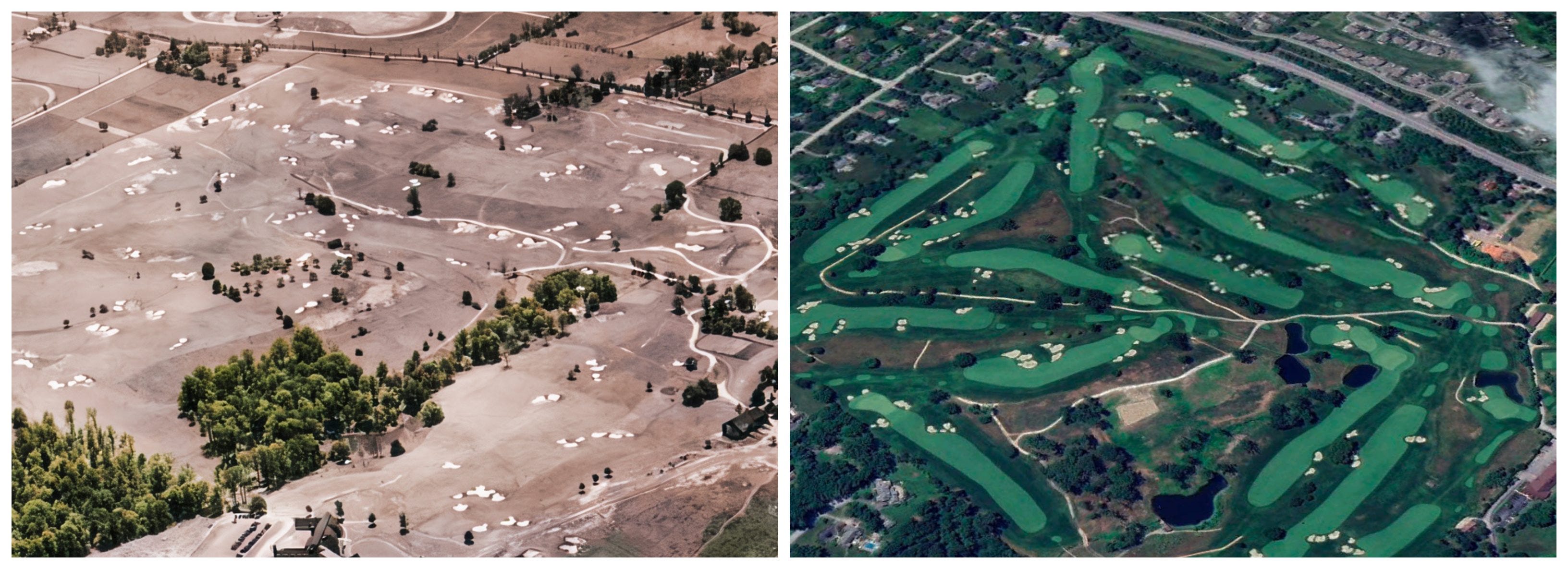
While the “push-up” greens are unmistakably peak Donald Ross & friends (with select modifications by various architects), Aronimink offers a fascinating reflection of the great designer’s most extreme departure from his Dornoch roots. The extreme number of bunkers employed at Aronimink has long been a source of debate, particularly given Ross’ modest approach to deploying hazards.
“Inasmuch as the greatest number of members in every club play for pleasure, the [architect] must avoid going to extremes,” Ross wrote. “Keep that class of players always in mind, and do as much as he can to help him keep up pleasure and enjoyment in the game.”
It’s believed that Aronimink member and eventual Ross associate J.B. McGovern helped inspire both the extreme number of bunkers and Aronimink’s trademark rows of three on full display after the recent restoration. Not everyone is enamored with the concept of so many bunkers.
“Not a fan of J.B. McGovern’s work,” said Aronimink’s first restoration-minded consultant, Ron Prichard, in The Golf Architecture of Donald Ross by Bradford Becken. “With his tendency to split a single bunker Ross designed into two or three bunkers, like the egregious work at Aronimink.”
There was also Ross’ uncharacteristically hubristic assessment of his finished product, one now commemorated by a plaque at Aronimink.
“I intended to make this my masterpiece, but not until today did I realize that I built better than I knew.”
Aronimink’s construction provided rare footage of Ross leading his team. Various equipment of the day can be seen (steam shovel, tractors, etc.), with horse-drawn pans still doing the brunt of the shaping work. Ross is seen in a three-piece suit with a blooming pocket square, his signature bonnet, a notebook, and a lit pipe. Laborers are hard at work as he gives directions and the clubhouse construction can be seen looking far along. It’s all surprisingly performative for the generally understated man from Dornoch.
The Par 3’s
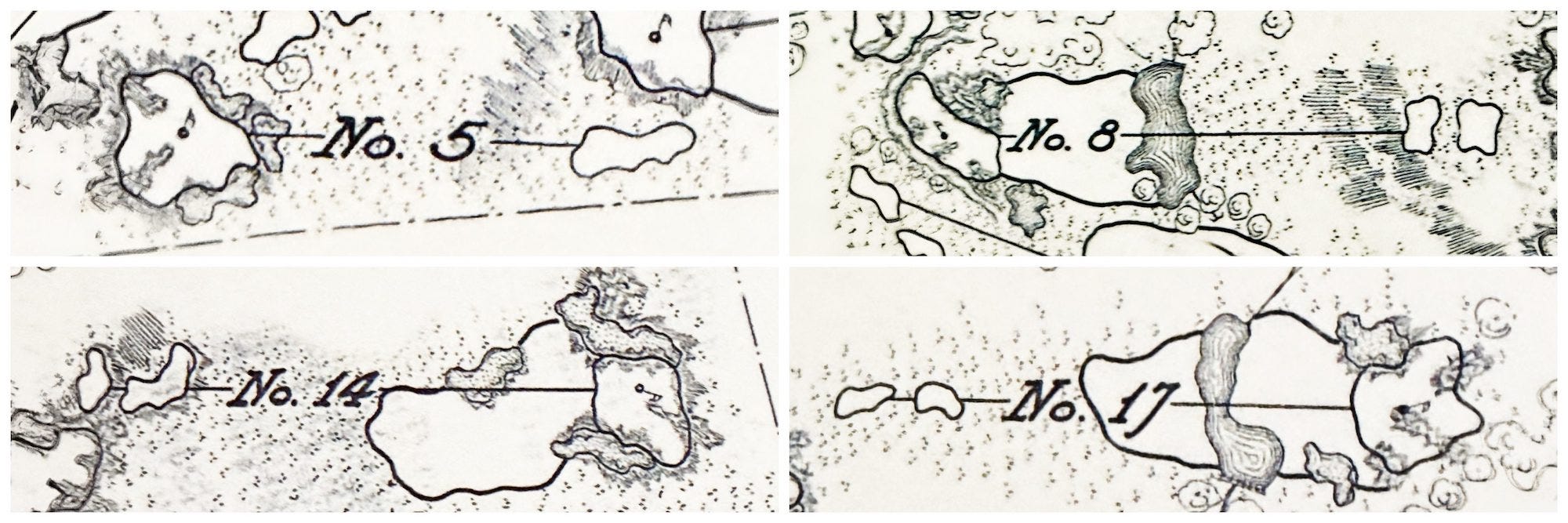
No matter what version of Aronimink has hosted championships, tackling the set of par-3s has been the key to success. Three of Aronimink’s one-shotters are longer than 210 yards. And when the Tour last visited, three of the four hardest holes were par-3s. (Note to Quadrilatdegenerates: Cameron Young leads the PGA Tour in Par-3 scoring while potential contenders Adam Scott, Ludvig Aberg, and Sepp Straka are in the top 10.)
The course’s par-3s played a combined +0.73 over par in the 2011 Quicken Loans (R.I.P.). All four of the par-3s feature a key red light hole location identified by Aronimink’s Director of Golf, Jeff Kiddie.
The fifth hole is the most character-rich of the par-3s and features one of Ross’ most artfully constructed and nuanced greens. While the entire surface swings right-to-left, it’s a far right spot to watch for. One that Kiddie said he’d never seen used until the PGA’s Kerry Haigh employed it during 2020’s KPMG Women’s PGA.
“When you look at it on the heat maps, there’s a tiny piece of green,” Kiddie says. “It was so far right, it was barely on the green. It looked really cool, but it’s not something that I think is necessarily one to fire at.”
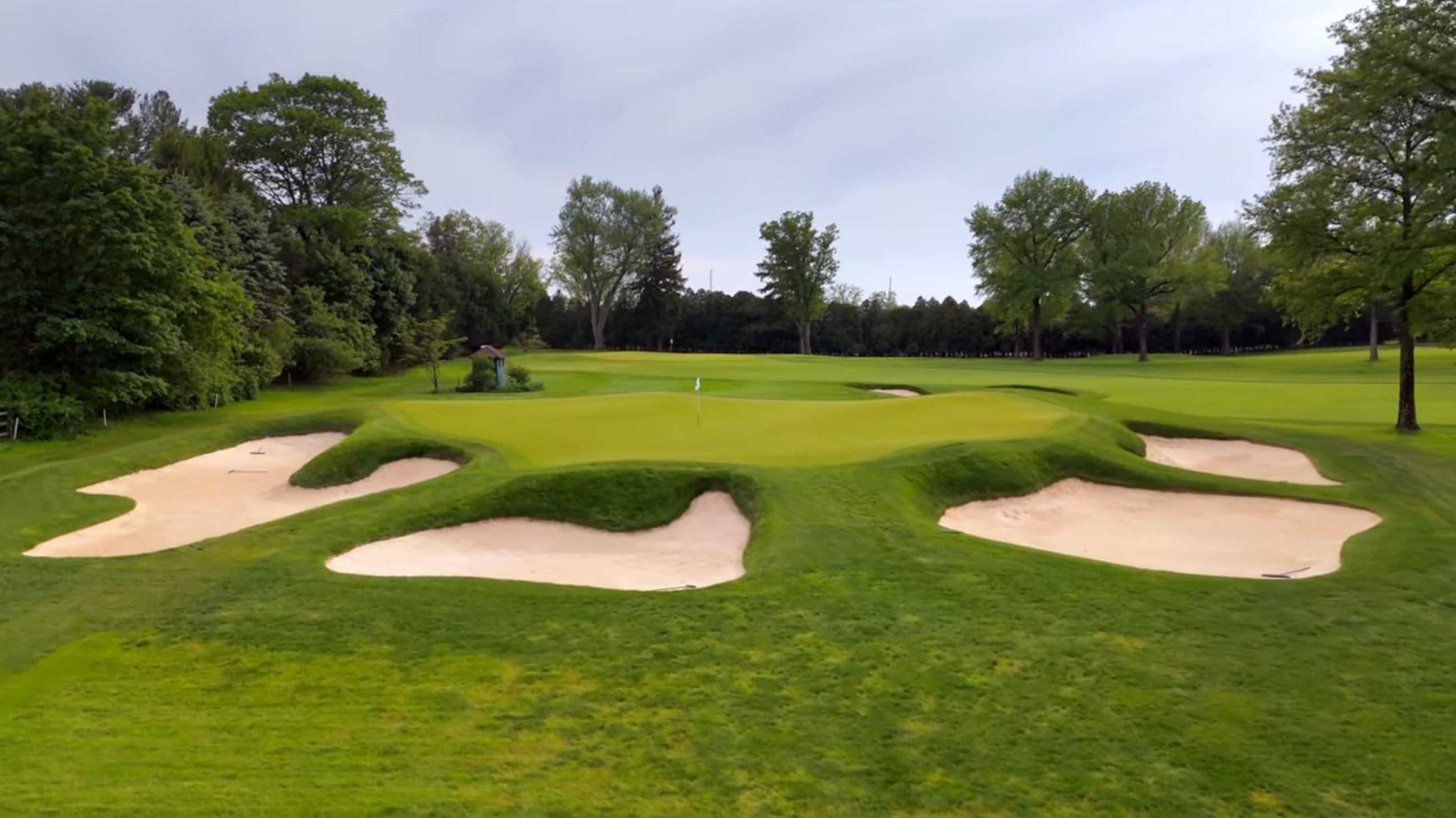
The 242-yard eighth hole played as the third toughest par-3 on the entire PGA Tour in 2011. Only 42% of tee shots hit the green in regulation.
“There’s a short left hole location that sits on a shelf just over the bunker,” Kiddie says of the downhill hole. “If [the PGA’s Kerry Haigh] does use that location, he’ll probably play the hole more like 200 yards instead of 240. It’s just a cool spot but it’s hard to get a ball to stay there, so you’re probably best just getting it on the front of the green and putting up to it.”
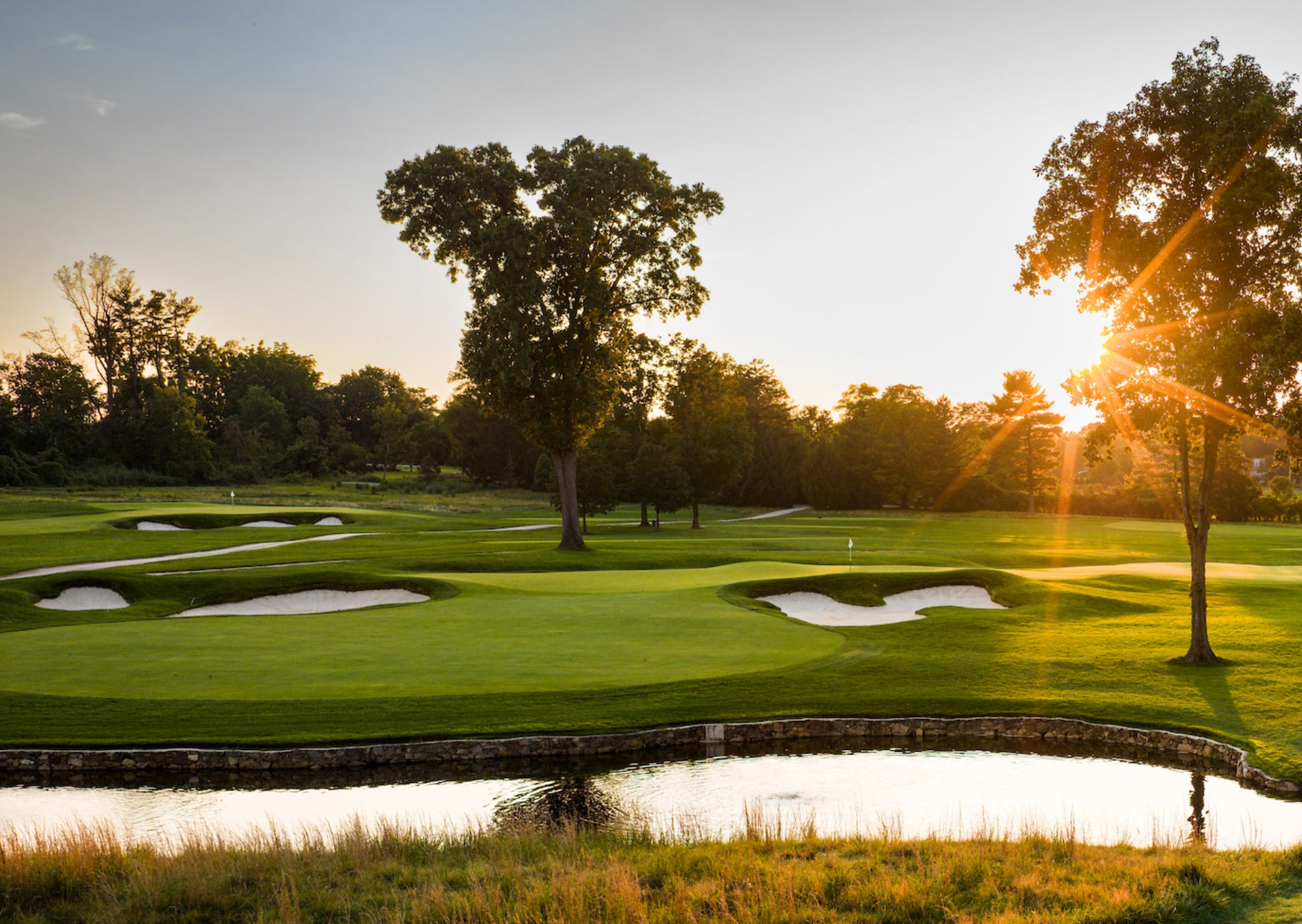
The back nine’s two par-3s—the 216-yard 14th and 229-yard 17th—play tough for different reasons.
“The 14th has a cool lobe back right, and the green actually runs away from you,” Kiddie says. “So it takes a really good shot to get it close. Also, hitting it just over the green leaves you that short little pitch out of rough from an uphill lie. It’s just one of those touchy-feely shots and a tough little pitch.”
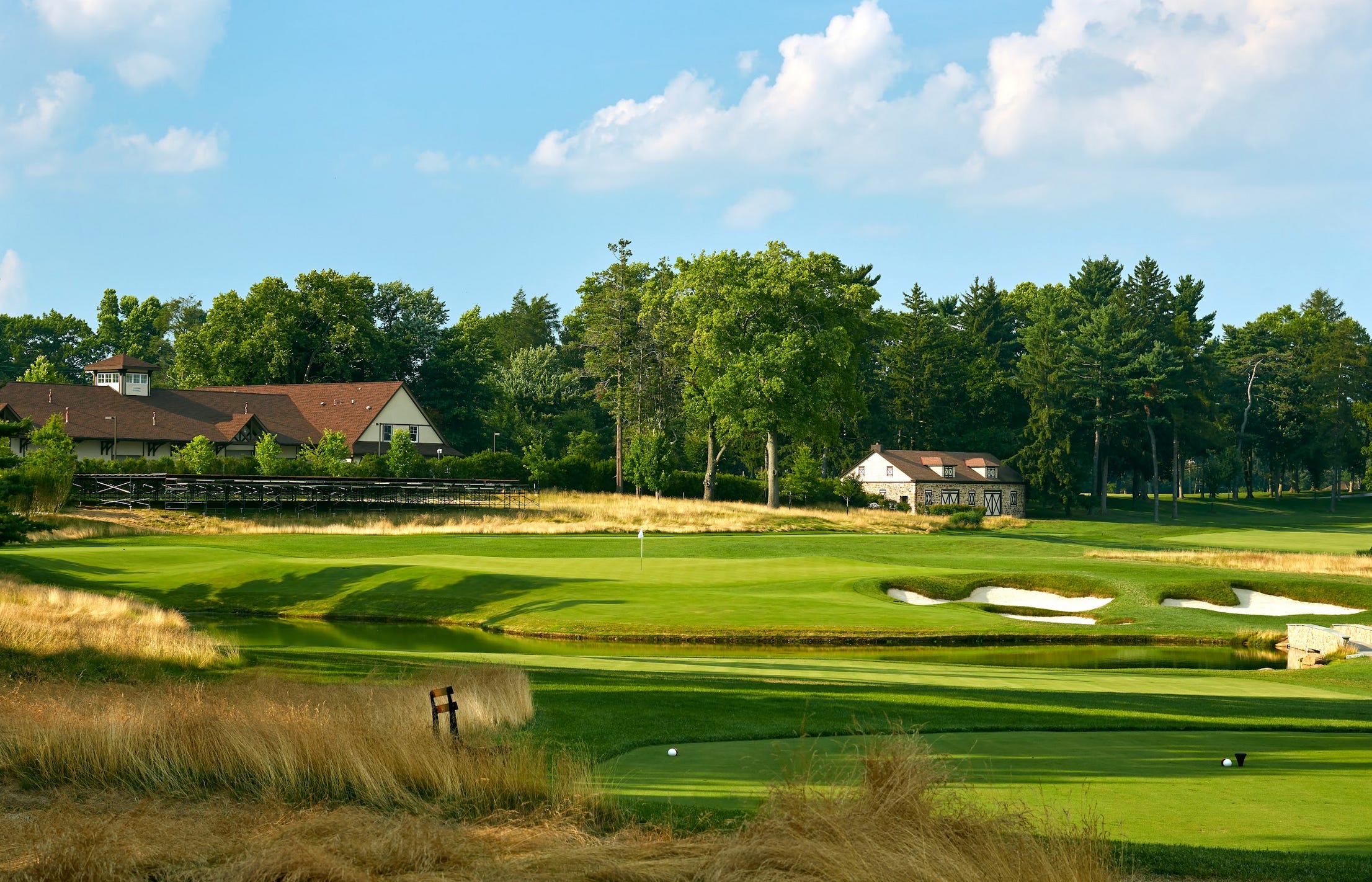
The par-3 17th has the least-Ross looking green at Aronimink thanks to a steep left bank abutting a fronting water hazard. Shocker of all shockers, Robert Trent Jones created the artifice to create a left quadrant fronted by water instead of Ross’ original. Kiddie’s advice: don’t take the left lobe on. Period. Play to the center of the green and take your two putts.
Drivable 13th?
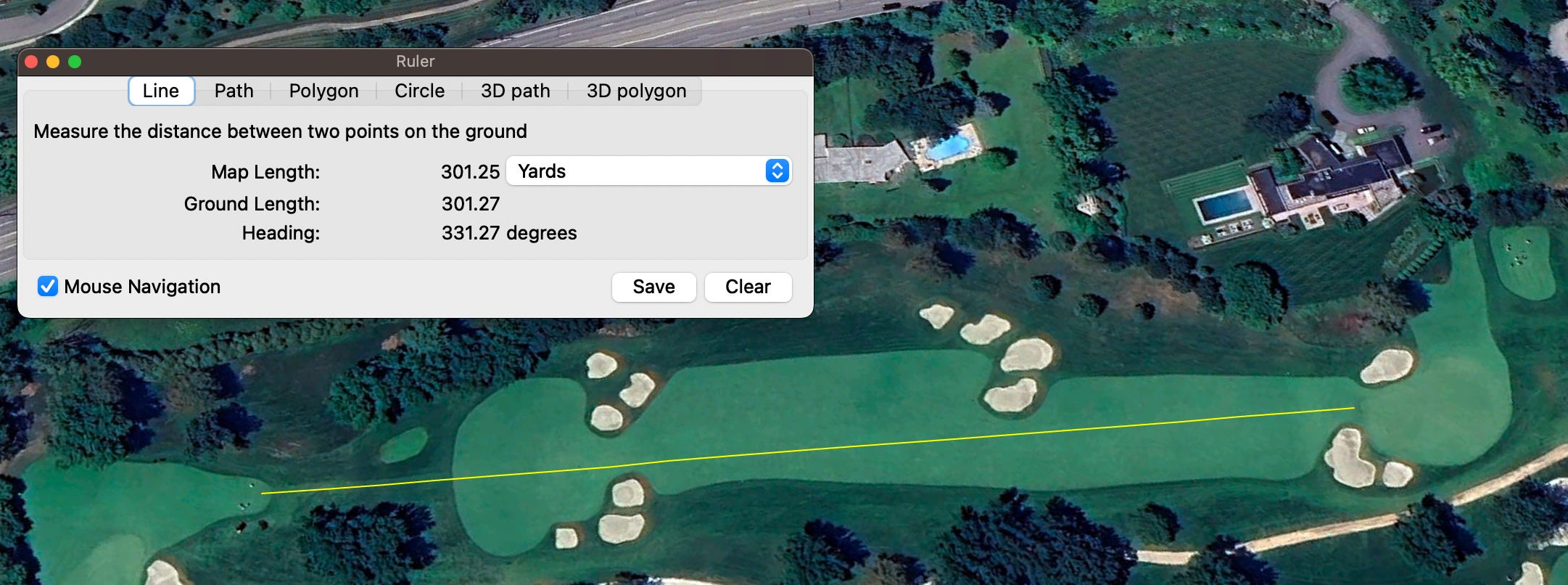
There are tentative plans to push up the 13th tee in hopes of getting players to drive the par-4. But this has the potential to be a pointless move thanks to an aggressive new boundary staking “peninsula” left of the green.
Featuring native grass and multiple out-of-bounds stakes moved in by the PGA, the intent to introduce an artificial penalty seems beneath a course of Aronimink’s character. (You can see Fried Egg’s Matt Roches explaining the new feature here).
Historically, no golfer has ever come upon a sudden line of tall stakes clearly meant to intimidate and thought, “ah, just how the architect intended. So natural!”
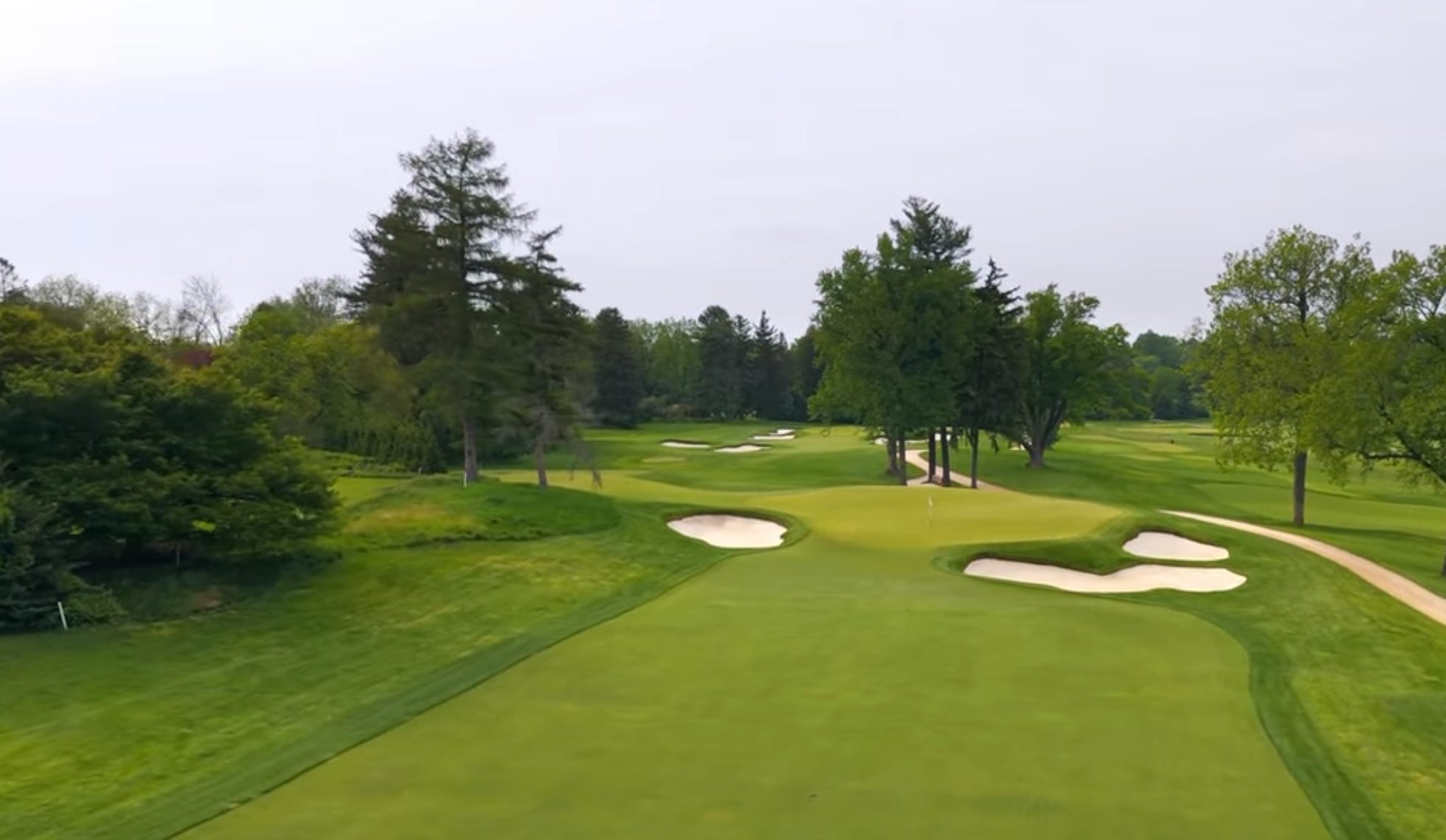
While it is technically the property line between Aronimink and the four-bed, eight-bath home at 515 N. Newtown Street, the staking appears contrived and unnecessary. This is how things looked before the stakes moved to the native grassline edge next to the green:
Reads And Viewing
Q&A with the late Jim Finegan on writing a history of Aronimink.
A really nice set of flyovers by the GAP:
The traditional Golf Architecture For Normal People analysis has been tabled because I haven’t been to Aronimink since the tree farm days. But after walking it next week, I’ll take a crack at a mini-review.
It should be a great week if the forecast holds! Thanks as always to H&B for supporting The Quadrilateral’s course previews.
Geoff
Geoff, really good stuff to get the week started. But keep in mind, there is no "downtown Philadelphia." There is only "Center City."
I love that you give "the team" the recognition they deserve. The supers and their teams are the only reason we have places to play. IMO every course should list the Superintendent along with the Head Pro on signage and bag tags.