
Champions, 2026 U.S. Open
The best performances from the week at Shinnecock Hills.

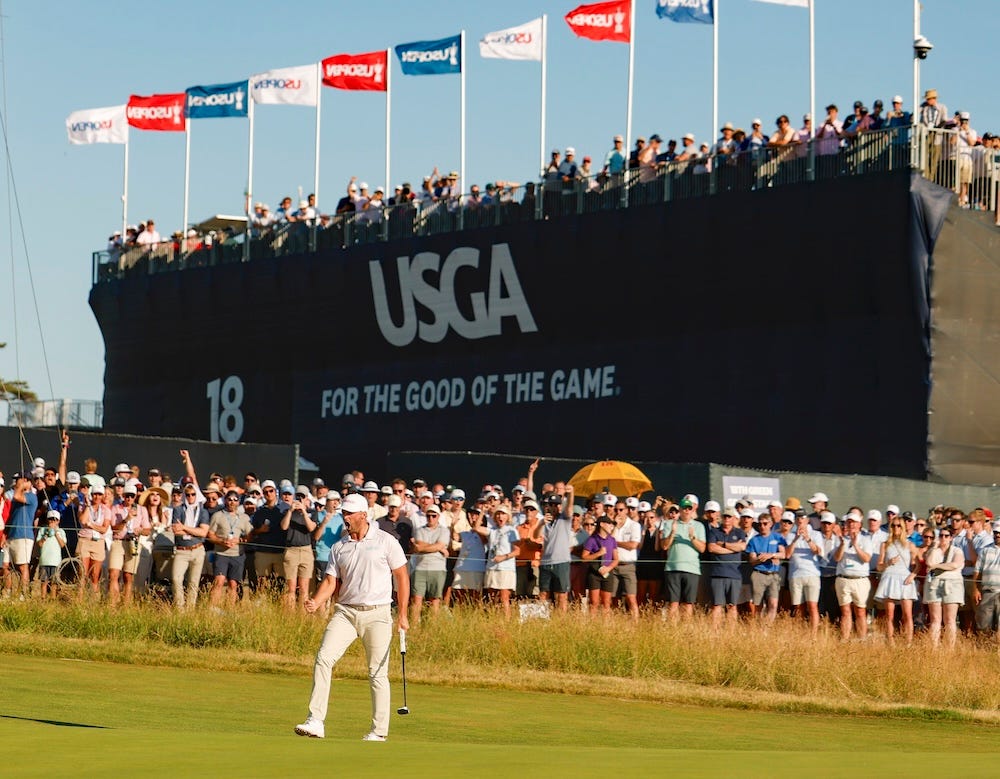
Winners from the 126th United States Open…
Wyndham Clark. Luck is essential to winning a major, and Clark enjoyed more than his fair share of good fortune all week. Thursday’s grim afternoon forecast predicted gusts-to-40, yet turned out to be worse for the morning wave after an unexpected fog delay. Whatever advantage Clark enjoyed from the unexpectedly benign late/early conditions was eventually nullified by the hostility he faced down the stretch. The negativity spiraled out of control by the weekend, and much of it related to his acquittal on multiple puppy murder charges last year’s U.S. Open locker bashing. While his reluctant acceptance of responsibility and non-apology last year led to some of the festering dismay, no (well-adjusted) adult could fathom the bizarre reception Clark received at Shinnecock Hills. The parallels with his 2023 win at LACC included Clark’s ability to take advantage of wider-than-usual U.S. Open fairways and incredible work around the greens. He enjoyed a 50% make rate from 20-25 feet on the greens for a whopping 370’3” of putts made. Clark’s second U.S. Open win will offer historians a telling window into the current state of the pro game. Clark was at Shinnecock because the USGA kindly welcomed him back after last year’s bad behavior and he gets every ounce out of miss-friendly modern equipment. While Clark might have been luckier than everyone else, he also pounced on the opportunities even as thousands were actively rooting against him.
Sam Burns. Without any visible baggage or bitterness from the ugly (weather) end to his 2025 U.S. Open, Burns contended again and nearly forced a playoff. His iron play was as crisp as anyone in the field based on proximity (35’8”/1st) and consistency (53/72 GIR), but it was his vaunted putting that let Burns down with three putts at Nos. 15 and 17. Yet he’s improving and contending every year in America’s national championship. So if his attitude can remain centered and his body healthy, the Golf Gods should steer him to victory lane at Pebble Beach, Winged Foot, or Pinehurst in the coming years.
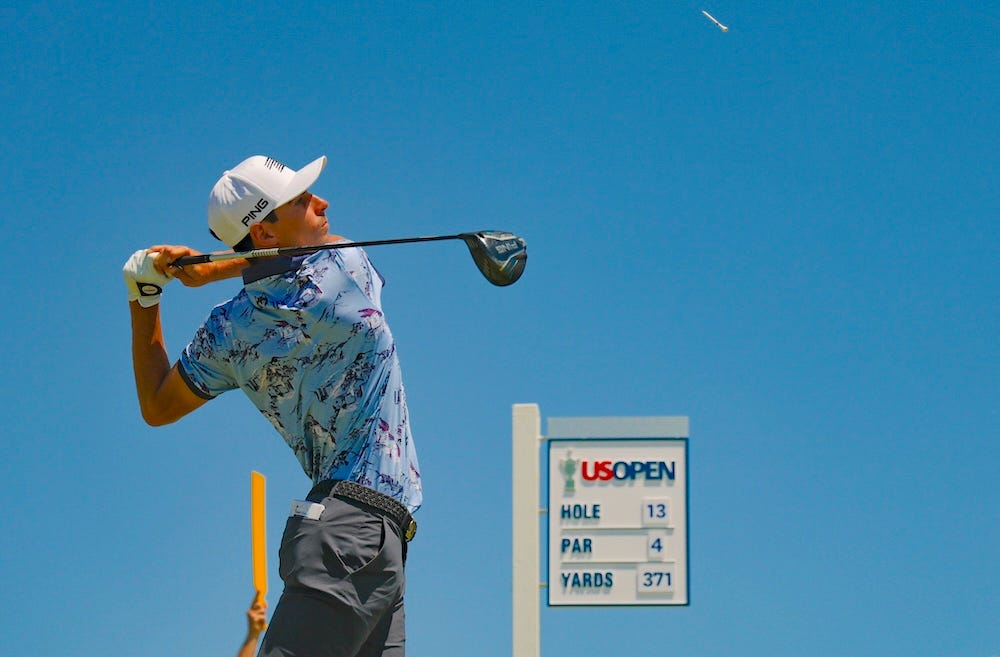
Joaquin Niemann. Even with an 11 on the card, a bruised ego, and signs he’s surrounded by a neurotic team that tried to claim coverage of his club hurling was all part of some grand ant-LIV conspiracy, the Chilean posted a final round 66 to finish T7. After an opening 78 with a two-stroke penalty for hurling a club, Niemann played the final three days in seven-under-par thanks to 15 birdies. In becoming the poster child for Code of Conduct policies deemed necessary in the pro game after too many brats have shown a lack of concern for courses or people, Niemann became the first contestant in U.S. Open history to shoot as high as 8-over in the first round and finish the championship as low as 1-over. According to Elias Sports Bureau, the only other time a player made a 10 or higher in the U.S. Open and finished among the Top 10 was back in 1895—when the field went a whopping 11 deep and players didn’t have “teams”. John Reid, who finished 10th, made a 12 on the sixth hole in the second round. Fun fact: his caddie also did not try to call a reporter a liar for simply quoting a witness whose observations were backed up by…Joaquin Niemann.
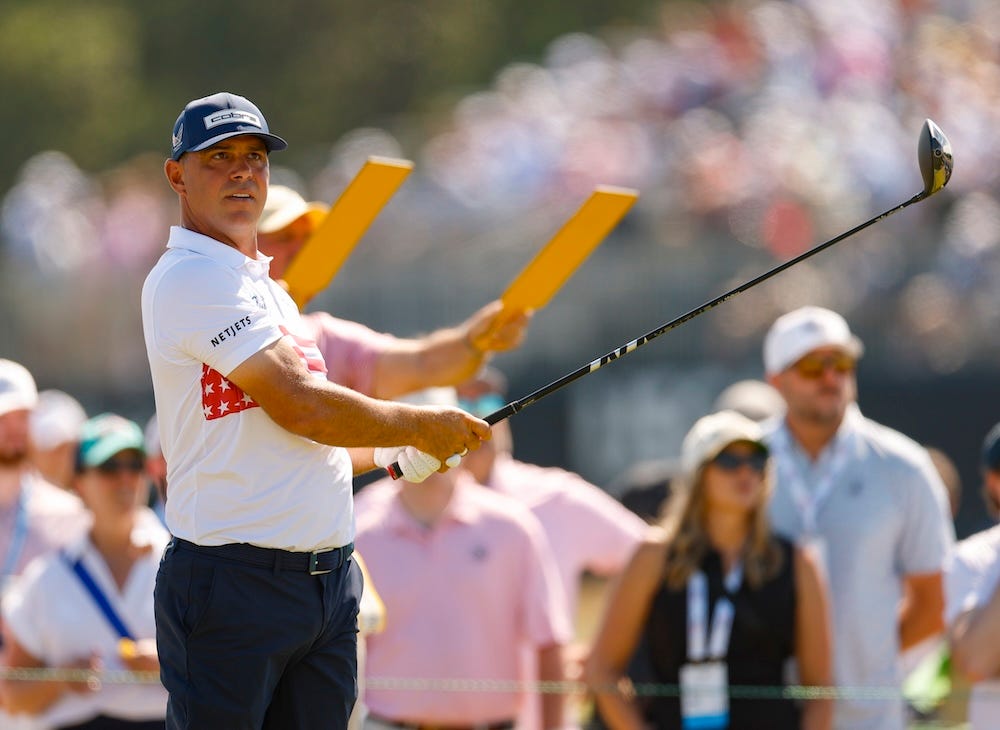
Gary Woodland. The 2019 champion continues to deal with triggering events when people get uncomfortably close (I witnessed one). To post 68 and finish T7 at age 42 is one thing. To pull it off while dealing with the often inexplicable side effects of brain surgery? Incredible.
Shinnecock Hills, the architecture. Ninety-five years after William Flynn’s dramatic reimagining of the property, the course continues to wow with a perfect mix of holes: long, medium, short, uphill, downhill, playing in a mix of directions and featuring just as many moments of engineered brilliance (Nos. 1-8, 14-17) and seemingly found rollicking wonders. incorporating sea-shaped rolling land (9, 10-12, 18). It’s not the course’s fault that modern green speeds, juiced equipment, and other “progress” often turns the focus away from the ingeniousness of each piece in the amazing puzzle. Thankfully, the setup showed off the course this time instead of detracting from one of America’s masterpieces.
Final Qualifying. Three golfers who started at the Local Qualifying level made it to the weekend, while an impressive 24 of the 72 players making the 36-hole cut came out of Final Qualifying. This year’s .333 success rate reinforces the vitality and beauty of an open qualifying process, one that ought to be preserved or even expanded. The 24 who survived two demanding 36-hole exams to graduate to U.S. Open weekend: Dylan Wu, Eric Lee (a), Peter Uihlein, Marek Fleming (a), Neal Shipley, Miles Russell (a), Emiliano Grillo, James Nicholas, Max Greyserman, Andrew Putnam, John Parry, Jackson Van Paris, Ben James, Ben Kohles, Zac Blair, Max McGreevy, Keith Mitchell, Ryder Cowan (a), William Mouw, Angel Hidalgo, Niklas Nørgaard, Caleb Surratt, Adrien Dumont de Chassart, and Tom Kim, Tibbits and Van Paris were the three who started at the local level and cashed nice checks for the impressive efforts.
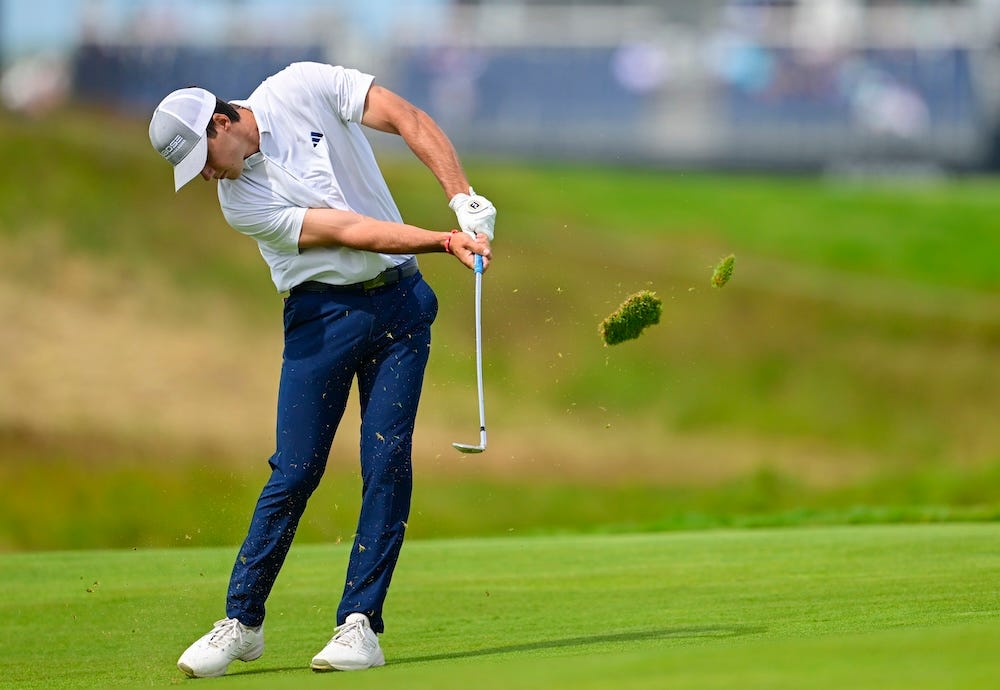
The Amateurs. Jackson Koivun made his final start as an amateur, Miles Russell did his most prominent work on a national scale, and Ryder Cowan performed more than admirably on a stage that felled plenty of bigger names or seasoned veterans. Besides his impressive game, Koivun looked sharp in his surprising new Malbon partnership (they didn’t dress him like he was in the trade parade headed to paint someone’s guest house). Russell’s swing and temperament are impressive for a high schooler. Cowan led the field in Strokes Gained Around the game by getting up and down 16 of 26 times.
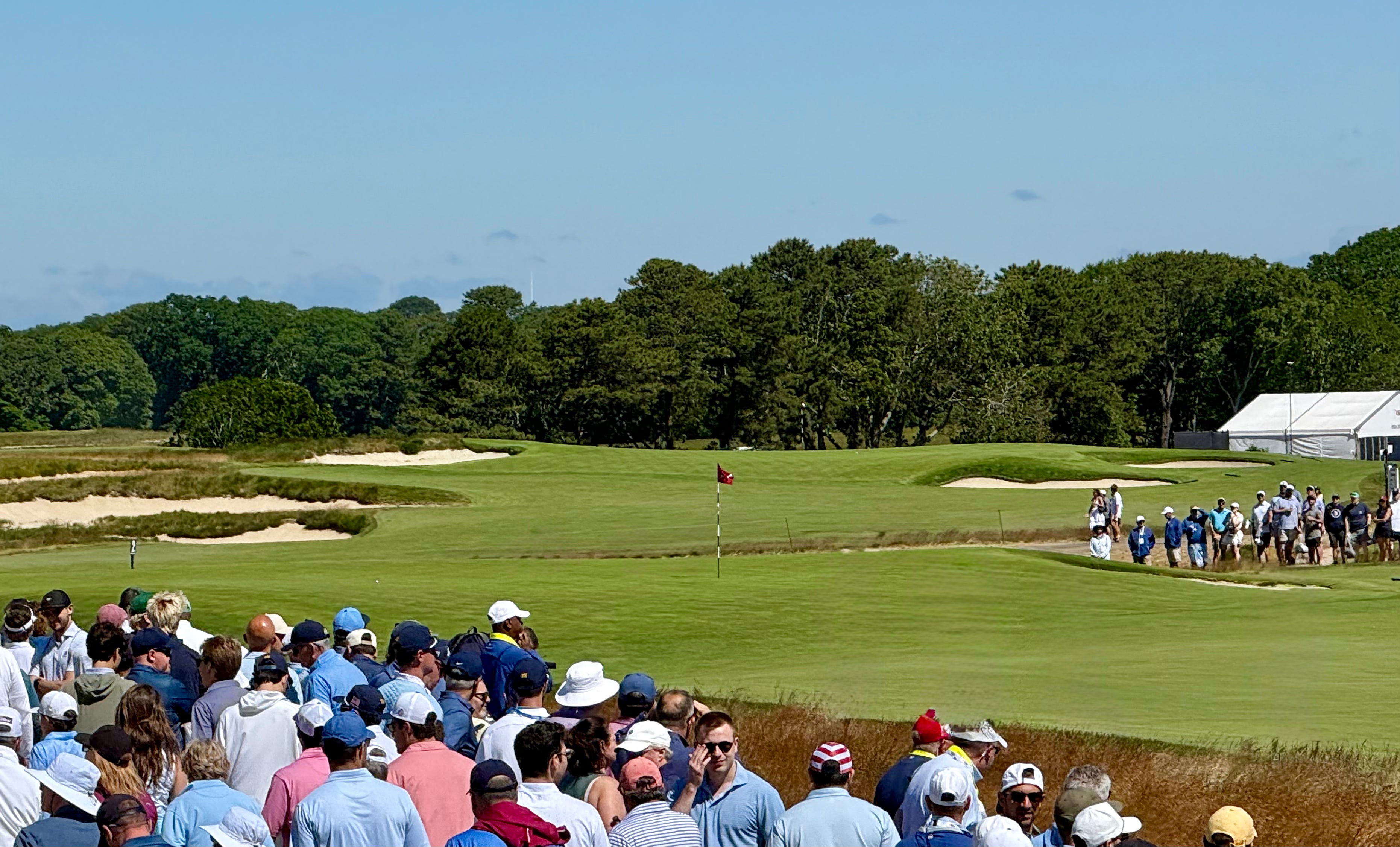
The Par-3s. Shinnecock’s sinister one-shotters seemed more reasonable this time thanks to the USGA team’s setup measures and lessons learned from the last two Opens. The infamous Redan 7th played as well as it could, given the way double-digit Stimpmeter speeds force a tight bubble of hole locations. This makes what’s supposed to be an option-filled hole a bit one-dimensional for a course with so many layers. Using the left-hand tee three of four days helped, too.
